Solving Equations in Algebra

In Algebra, teachers tend to start completely over with solving equations as if the students have never seen equations before. Students have been solving equations for a while at this point. I thought it would be nice to take a look at a few questions from the state assessments in Texas to show what the students should know before coming to Algebra. I am a stickler for understanding what students should already know before they get to me and what they will learn after my class. This helps us to know what and how to teach certain content. My advice to all new math teachers: Do not get stuck in one math subject. Move around above and below where you like to be so that you understand fully what students have learned and will learn. Take a look at the questions below to get an idea of what they are tested on in 6th and 7th grades:
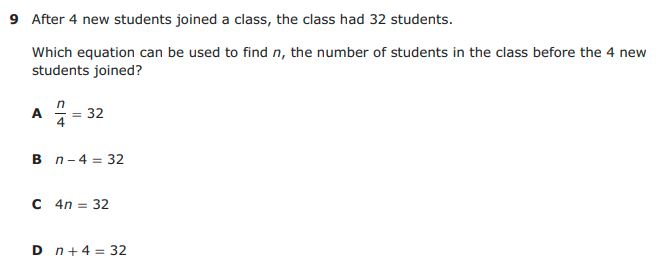

2019 6th Grade Math STAAR Test – By the end of sixth grade, students should be able to set up one-step equations and solve them.
2019 7th Grade Math STAAR Test – By the end of 7th grade, students should be able to solve 2-step equations.

I don’t think there is anything wrong with reviewing the material. If you read my last post about Algebraic Expressions, you learned that I still review this every year. I do think this means that we should not spend too much time covering material that they should already know. The Pandemic has caused some issues with learning gaps, so it’s important that we recognize that we might have to review, refresh and even reteach. Continue to look at the next set of problems to see the progression:
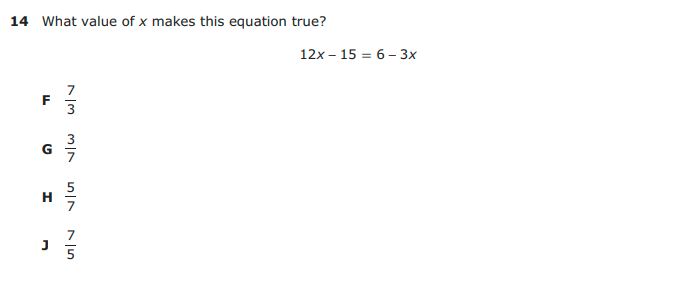
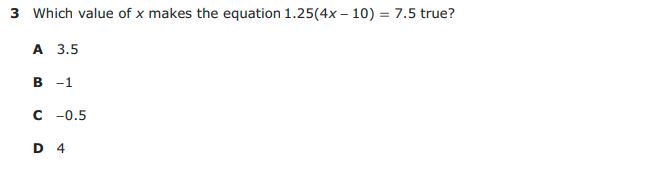
2019 8th Grade Math STAAR Test – By the end of 8th grade, students should be able to solve equations that have variables on both sides of the equal.
2019 Algebra Math STAAR Test

It’s obvious by the time students finish Algebra, they should be able to solve multi-step equations with variables on both sides that contain the distributive property and might contain decimals or even fractions. It is very important that students understand how to check their answers. If the test is multiple choice, they will be able to get the answer correct by plugging in the answer choices. (I don’t like that, but before the STAAR test I make sure they know all the tricks and tips.)

My progression on teaching students how to solve equations goes like this:

  • Review solving one- and two-step equations. Discuss how an x is really 1x. Discuss inverse operations.
  • Practice checking solutions.
  • Use the distributive property in equations. Show students how to distribute and other alternate methods depending on the look of the problem.
  • Solve problems with variables on both sides. Use combining like terms.
  • Solve more complicated multi-step equations.
  • Solve equations with decimals and fractions. Teach students to clear decimals and fractions. (This is a skill that will come in handy on the college entrance exams.)
  • Solve equations that have no solution or infinite solutions.
  • Setting up and solving equations from word problems.

You may end up spending more time in this area than you planned, but think about how much it will help the students in other areas. If they have a good foundation of solving equations with one variable, then solving inequalities, literal equations, linear functions, quadratic functions and exponential functions will be much easier.

The progression that I discussed earlier is contained in some lessons that you will see below. I bundled this material in a comprehensive unit that contains:

  • Expressions
  • Solving Multi-step Equations
  • Special situation in Equations (no solution, infinite solutions, clearing decimals and fractions)
  • Writing and Solving Equations
  • Equation Assessments
  • Inequalities
  • Literal equations

This will be what I’ll use this year in my Algebra classes. All of these activities come with a PowerPoint for notes, a PDF packet with notes, practice and a quiz. There are also a few digital activities dispersed among the resources. Good Luck and remember how important it is to give your math students a strong foundation!

Here’s how I start with solving equations.
A look at special situations.
Students must know how to set up equations.
This is a variety of assessment options.

The Whole UNIT!!!

Algebraic Expressions

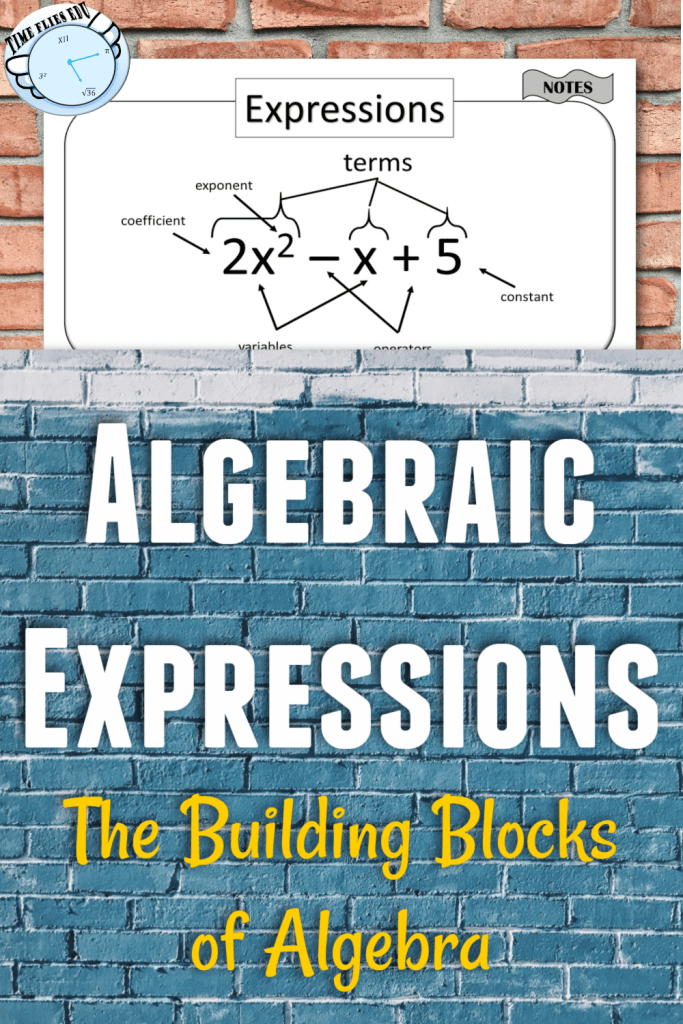
By the time students are in algebra, they should have experience with algebraic expressions. I never feel comfortable enough with this fact, so I always start the year with a refresher. Expressions are the building blocks of algebra, so it’s better to cover this topic and make sure students have a good foundation before heading into solving equations.

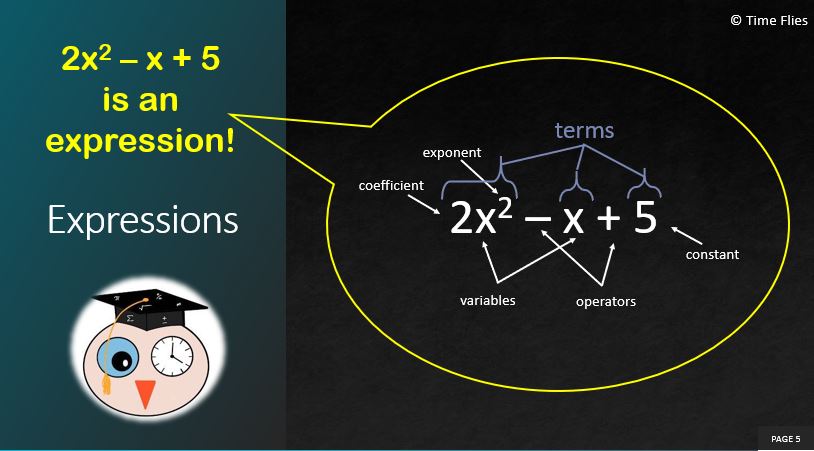
As I begin the year, I like to review operations with integers and rational numbers, order of operations, expressions and terminology. Terminology is key. Students must know what you are talking about when you use words such as like terms, coefficients, variables, distribute and constants. Also, never assume students know things like a fraction is really a division problem and all numbers have exponents of 1 when no other exponent is visible. Get all of this taken care of in the beginning and you will find out really quickly who has these foundational skills and who doesn’t. I will not get the calculator out until after all of this material has been covered.

Here’s the content that I like to make sure to cover during the expression lesson:

  • Setting up expressions from phrases like: five less than twice a number
  • Evaluating expressions by plugging in a number for a variable. It’s important to review order of operations at this point.
  • Simplifying expressions using combining like terms and distributive property.
  • Using applications with expressions.

If students are able to do the 4 items above, they will be in a good position for success when moving to solving equations. I will probably take a week to practice expressions, but I feel like this is time well spent.

My lesson plan will look something like this – (I’m on a block schedule, so I see my students 80 minutes two days and 50 minutes on Friday.)

Day 1:

  • Bell Ringer – Operations with Integers
  • Math Terminology
  • Expression Opener
  • Setting Up Expressions
  • Evaluating Expressions

Day 2:

  • Bell Ringer – Operations with Rational Numbers
  • Simplifying Expressions
  • Practice Writing, Evaluating and Simplifying with a Partner
  • Application with Expressions – Digital Practice

Day 3:

  • Quizizz Activity – (I have a Quizizz Activity that practices the skills used in the application activity.)
  • Quiz – Short quiz that will let me know how well the students understand the concept.

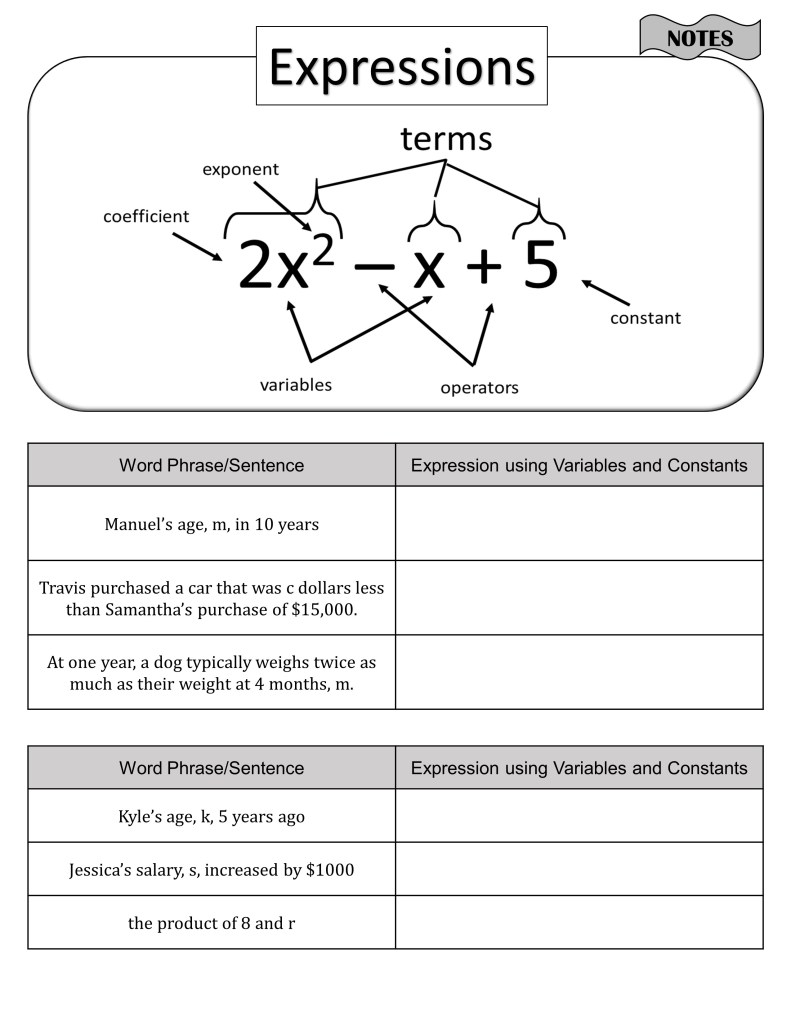
I have a resource that covers all of this material. The expressions lesson that I created has a PowerPoint that goes through the terminology and example problems. I like students taking notes and following along, so I have note pages that follow the PowerPoint.

Expression PowerPoint
Note Page Example

The lesson comes with a practice page that contains 12 problems covering the three categories: writing expressions, evaluating expressions and simplifying expressions. The quiz has a section where students fill in terminology and the rest of the problems are multiple choice for quick grading.

The application part of this activity is a Google Slides where students show that they understand what an expression is versus equations or inequalities. Students then see some perimeter problems where the dimensions are expressions. Students solve the problems two ways. There is a video tutorial that walks students through simplifying some expressions with the distributive method.

Expressions are the foundation of Algebra. Students start learning expressions early in their math classes, but variables are an abstract concept and tend to be something difficult for them. The more we expose our students to understanding the purpose of a variable, the better they will grasp it. Give your classes lots of examples of how expressions might be used and keep checking for understanding. See if they can come up with their own examples. If they can create their own expressions and tie it to a real-life concept, then you know they have made the leap to understanding this idea.

If you’d like to look further into my Expression Lesson, I have linked it to the picture below. Thank you for going through this thought process with me and good luck with your students.