Angel and Cowboy – Working with Inequalities

I came across the Angel and the Cowboy years ago. I did not create this, but I did add the bow tie. I love using this with inequalities. I have found it most useful when working with piecewise functions. The idea is that the hats and the face deal with graphing, the body is used for writing domain and range in interval notation form and the legs help with writing inequalities. All the pieces are related. Notice how all the Angel symbols are for NOT EQUAL and the Cowboy symbols are when things are EQUAL.

I found this slide from when I taught piecewise functions last year:

Let’s break this idea down a little further. If you asked your students to give the domain of only the left arrow, then they would see an open circle which is the angels face, so I call this an angel problem. The student would notice that the domain goes from negative infinity to -1. If you want the students to write this in inequality form, they would use the angel symbol and say: x < -1 or I allow my students to write: -∞ < x < -1. If you asked them to write the domain in interval notation form, they would write (-∞,-1). All symbols came from the angel!

Now let’s look at the right arrow. This is a cowboy problem (well not completely). The enclosed dot indicates that the problem is a cowboy problem, but since there is an arrow on the opposite end which represents going to infinity, this problem is also an angel problem. The domain in inequality form would be > -1 or -1 < x < ∞.  In interval notation you would write [-1, ∞). The second inequality answer and the interval notation answer contain both cowboy and angel parts. (Since you can never reach infinity, you can never equal infinity. That’s why I added the infinity symbol to the angel.)

Anytime graphing and writing inequalities is a part of a lesson the angel and cowboy can be useful. You may not need all the parts of the angel and cowboy. Interval notation is not taught until Algebra II in Texas, so when I’m using this in Algebra I, I usually just tell the kids that they will learn about the rest of the symbols later.

The solid and the dotted lines above the faces come in handy when graphing inequalities. If we are graphing y > 2x – 3, then the students will realize that the symbol came from the angel, so the line will need to be dotted. The one thing that the angel and cowboy do not help with is shading above or below the line. You could easily add the words above and below to the symbols on the legs if you wanted.

I’d love to hear from other teachers that have used this before. Let me know how you use it or how you have tweaked it. If you’ve never seen this before, I hope you will find this handy and you will be able to use it in your own classroom!

I’ve made a free poster of the angel and cowboy that is in my TpT store. If you are interested, please use this link and download this resource.     Cowboy and Angel Poster

Algebra II – Starting The Year

In Algebra II, it’s hard to decide how to start the year. I want to review, but I don’t want to keep us from moving forward. I need to know how much the students remember from Algebra I. My students were in Geometry last year. How much Algebra was incorporated into their Geometry class? I feel like my best bet is to begin by solving equations and inequalities. The activity that I will use, starts easy and gets progressively harder. The students will not be able to use a calculator because I need to know who REALLY knows how to solve equations without tricks or help. This activity is sold in my TpT Store:

 Solving Equations and Inequalities

Solving Equations and Inequalities

I really like this activity because there are options. I can make it fun by using the answer banks. The answer banks have the answers with an activity. A few of the activities have the students draw a picture. Another activity has the students fill in a movie title. There are progress checks along the way as well. I think that I will use the easiest page as a bellringer on the first day of class. I’ll have them work through as much as they can on the rest and send it home to be finished. I can use the progress checks as quizzes or as pages for their interactive notebooks. This resource will give me an idea of where the students are and will be a nice segway into solving absolute value equations which is what I plan on doing next.

Find What You Aren’t Looking For First!

I like to challenge my students. One way that I like to challenge them is through tricky diagrams and pictures. I don’t want every problem to be straight forward. I always tell my math students that sometimes you must find something you aren’t looking for in order to find what you ARE looking for. Since I teach 9th graders, I’m trying to get them out of the mode of thinking that all problems should be easy to figure out. I love watching them really think, but it tends to be frustrating when you have those students that want to ask you about every single problem or want you to stand at their desk and watch them so they can ask you questions. I’ve learned to give them a good 5 to 10 minutes of independent thinking time, then I’ll let them compare what they have so far with a partner. I’ll watch and listen to the conversations to gauge what to do next. If they are still struggling, I may give them a hint. Sometimes I’ll play the game where the only answers that I can give are yes or no. This will help them learn to ask good questions. Below are some examples of the types of problems that I’m talking about. If students get used to doing these types of problems, they will be excellent problem solvers and even though a problem may stump them, they will have the experience to know that if they stay after it, they can eventually figure it out.

This is from my Circles: Special Angles and Segments Resource

This problem is from my Law of Sines and Cosines Resource. 

I call this one, the Poodle Problem. It is in my Trig Unit.

This problem is from my Special Right Triangle Unit. 

The great thing about these problems is I’ve made them easy to grade. You know real quick if they’ve worked the problem correctly or not.

After a year of these types of problems, I’m hoping to see improvement in my student’s college entrance scores and EOC scores. I know that this will also help with their growth mindsets. I feel like this is definitely a win/win!

Law of Sines and Cosines

Real-life Examples of Solids of Revolution and Cross-Sections

I get so much out of creating lessons. When you deeply understand a concept, you can talk about real-life situations and the math behind it. I’ve never thought about it until now, but a revolving door is a perfect example of a solid of revolution. Taking a rectangle and revolving it around a pole, creates a cylinder. What a beautiful example!

The last time I was at an AP Calculus seminar, I learned that another awesome example of a solid of revolution is a honeycomb decoration used at parties. These are perfect examples because you can see the 2-D version before it is rotated. This is exactly what we want students to know. What does the 2-D version become with you rotate it? If they can visualize that, then they get it!

Here is something fun I did in my class recently. Students cut out a shape and taped it onto a straw. Students had a blast! Some students took video!

Another concept that goes hand-in-hand with 3-D figures is the idea of cross-sections. Everytime we slice an orange, apple, or a loaf of bread, we have created a cross-section. In Algebra 2 and Pre-Calculus, we discuss cross-sections of cones. Depending on how you slice the cone, you can get a circle, an ellipse, a parabola or a hyperbola. 


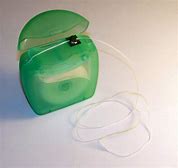
A great hands-on activity for cross sections is to have the students create a shape out of play-doh. Take a piece of dental floss and slice the object horizontally, vertically or even at an angle. Be sure and have them make predictions before they perform the experiment! Students with phones can take a before and after picture so that other students can see.


I enjoyed creating my Intro to 3-D Figures resource. It’s amazing how after teaching math for many years, that I can still pick up valuable insights and ideas. Math is infinite. There is no end to what you can learn! Check out both resources below. They are the same except one is a printable and the other is a digital Google Forms format!

 Intro to 3-D Figures

Intro to 3-D Figures