Summer Reading for Secondary Math Teachers

Summer is almost here and teachers and their students cannot wait. I personally love summer and all that comes with it including time to read. Reading for pleasure is my favorite, but it’s equally fun for me to read about my interests. The last book I read was by math education expert Jo Boaler titled “Mathematical Mindsets: Unleashing Students’ Potential Through Creative Math, Inspiring Messages, and Innovative Teaching.” I love how Jo Boaler believes that all students can learn math and it really is about nurturing a growth mindset.

Here are a few suggestions for math books that will inspire and give you new insight into the wonderful world of teaching mathematics. These books were selected because they will be enjoyable and hopefully will not remind you of a boring inservice!

“Visible Learning for Mathematics: What Works Best to Optimize Student Learning” by John Hattie, Douglas Fisher, and Nancy Frey. (paperback version or Kindle version)

“What’s Math Got to Do with It?: How Parents and Teachers Can Help Children Learn to Love Their Least Favorite Subject” by Jo Boaler. (paperback version or Kindle version)

“It’s a Numberful World: How Math Is Hiding Everywhere” by Eddie Woo. (paperback version or Kindle version)

“Math with Bad Drawings: Illuminating the Ideas That Shape Our Reality” by Ben Orlen. (paperback version or Kindle version)

100 Ideas for Secondary Teachers: Supporting Students with Numeracy Difficulties (100 Ideas for Teachers)” by Patricia Baptie and Sue Dillon. (paperback version or Kindle version)

Now that you’ve looked at the list, grab a cool drink, find a cozy spot, and dive into the world of math education through these inspiring reads.

If you will be teaching for the first time next year, I have a blog post that you should read called 1st Week of Math Class Ideas. Good Luck!

***Please be aware that as an affiliate marketer, I may earn a commission for any qualifying purchases made through the links provided in this blog post. This commission comes at no additional cost to you. I only recommend books and products that I genuinely believe will be valuable to you as a math teacher. Thank you and happy reading!

15 End-of-Year Ideas to Keep Your Math Students Engaged

The end of the year is fast approaching and you’re probably wondering what you can do in your secondary math class to make the most of the time left. Here are some suggestions. See what will fit your situation!

  1. The obvious thing to do is review. You’ve covered a lot of topics throughout the year, so take some time to go over key concepts and formulas. Throw in some practice problems, games, technology, and hands-on activities to reinforce what has been learned. Reviewing is boring, so as you read down this list, use some of these strategies in your reviews.
  2.  Another idea is to assign a project that allows students to apply what they’ve learned to a real-world problem. This would be a great way to see math in action and flex their problem-solving muscles. An example would be to have students model real-world phenomena, such as population growth or temperature changes, using algebraic functions. This project would require students to apply their knowledge of function notation and graphing to real-world scenarios.
  3.  You will probably be giving exams, so another thing to talk about is test-taking strategies. Discuss how to read and interpret word problems, how to show work, and how to avoid common mistakes. Practicing these skills would be beneficial to show students how the strategy works. Teach your students how to make a brain dump. This is especially helpful for state exams.
  4.  Create a fun and engaging math competition for students to participate in. This can be a great way to end the year on a high note and showcase students’ math skills.
  5.  Offer individualized feedback to students on their performance throughout the year. This can help them identify areas for improvement and develop a growth mindset. If you have over 100 students, this could be a daunting task. Ask students to self-reflect first, then you could quickly add a statement or two and comment on what they felt were their strengths and weaknesses.
  6.  Recognize students who have excelled or improved in math throughout the year. This can be done through awards, certificates, or other forms of recognition. It’s also fun to give silly awards since, at this point in the year, you know the students so well.
  7.  Encourage students to set goals for themselves and create a plan to achieve them over the summer or in the next school year. It is a great skill to learn how to set goals. The great thing is that you don’t have to look at them. Have students type the goals in the notes on their phones and then encourage them to occasionally look at them to see their progress. 
  8.  Reflection activities can help students process their math learning and prepare them for future math classes. Some ideas are surveys, class discussions, journaling, writing a letter to their future self, and creating a portfolio with some of their best work.
  9.  Choose a math-themed movie or documentary to watch in class and use it as a springboard for discussion and learning. Some great options include “Hidden Figures”, “A Beautiful Mind”, “October Sky”, and “The Story of Maths”.
  10.  Create or have your students create math-themed board games that can be played in class. This is a great way to review key concepts while having fun with your students.
  11.  Group challenges encourage teamwork, foster critical thinking, provide a fun and engaging experience, build problem-solving skills, and promote healthy competition. Some group challenges are scavenger hunts, escape rooms, Kahoot, Quizizz, Jeopardy, debate, and so forth.
  12.  Take your students on a math-focused field trip to a museum, science center, or even a local construction site. This can help them see the practical application of math in the real world.
  13.  Bringing in a guest speaker would be a nice change and break up the monotony at the end of the year. It can inspire and motivate students, provide a different perspective, introduce new topics, build connections, and offer networking opportunities.
  14.  Peer tutoring is a great way to add something special to the end of the year in a math class. It encourages collaboration, builds confidence, reinforces learning, provides personalized learning, and promotes social skills.
  15.  Go outside if it’s feasible. Let students take their math notebooks and pencils and sit under a tree to study or take chalk outside and let students work on math problems on the sidewalk. Getting outdoors at the end of the year is a great way to refresh and rejuvenate yourself and your students!

It’s super important to plan out the end of the year for your math classes. You don’t want to bore your students with endless reviews and exams. Instead, make it fun with cool activities that connect what they learned to the real world. Personalized feedback is a must too, so get to planning and make the end of the year a blast for your students!

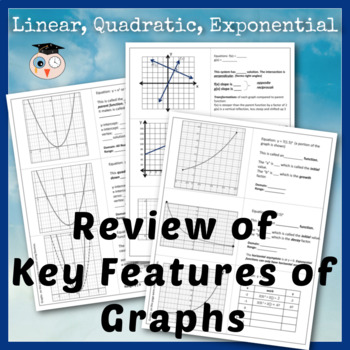
Here are some of my own resources that I tend to use at the end of the year:

Making Mistakes in Math

Say this to yourself: “I make math mistakes and it’s ok!” Most of the mistakes we make as teachers are probably because of being careless. Our minds are processing 20 different things while we are teaching. We are wondering if the students are understanding or if Susie is on her phone or if Johnny is ever going to come back from the restroom. 

Make it known from the beginning of the year that you WILL make mistakes and you need the students to catch those mistakes. If they catch the mistake, then give them bonus points or a sticker or some reward to let them know it’s important that they notice your mistakes. Also tell your students that you do not know everything about math. That might shock them. You need to show vulnerability so that the students feel comfortable about their own mistakes. When you make a mistake and a student points it out, say THANK YOU!

Something that I have said many times this year is that I want the students to be wrong… a lot. I want them to mess up. I want them to make mistakes. I want them to leave the class and say, “Well I made a lot of mistakes today in math.” Weird, I know…but if they can say that, then they worked hard in class. Mistakes are a part of learning. Mistakes mean effort. No mistakes will probably mean no work. 

Have you asked a student a question and they say, “I don’t know?” Tell them they can’t say that anymore. Do not let them write IDK for an answer on a paper. That’s a big no no. I tell the kids to “Fake it until you make it.” Act like you know. Put something down or give some sort of answer. Who cares if you are wrong! 

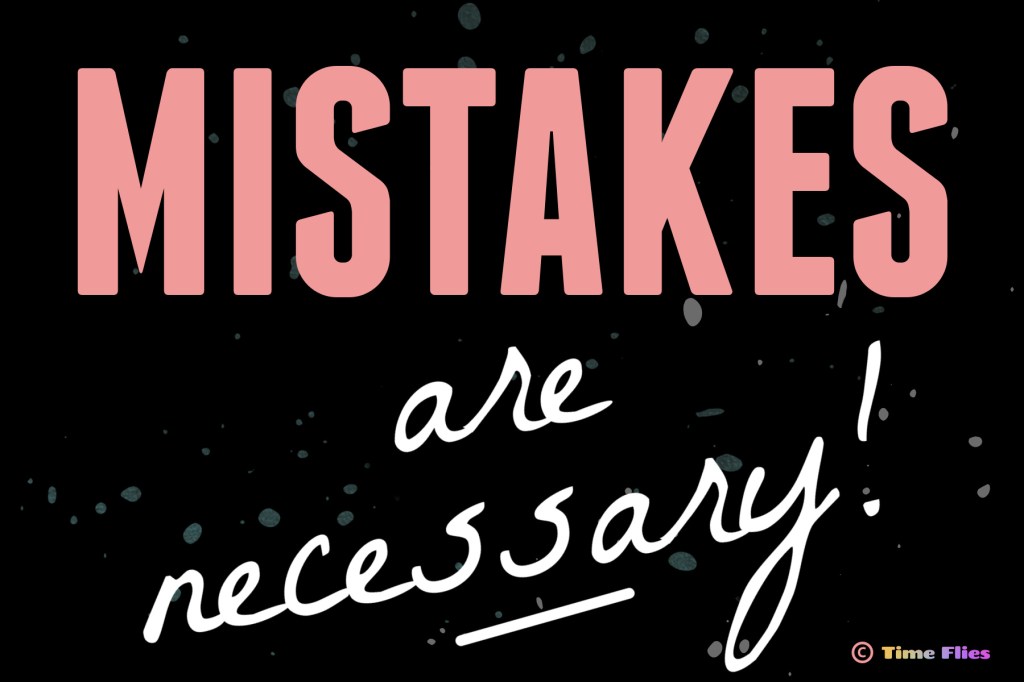
Next week when you are teaching, look at your students and see who is just sitting. Walk the room. Who has a blank paper. Don’t let this happen. Get the students involved and teach them to be ok with math mistakes. Mistakes are necessary! 

(Here is a gift to you. A digital display poster of Mistakes are Necessary. This is from my Google Drive… if you cannot open it, try from your personal email and not your school email.)

This post was a newsletter first. This is the kind of content that I like to write for my email subscribers. If you’d like to be a part of my email list, sign up here. My goal is to provide tips, ideas and resources for the busy secondary math teacher or tutor. If that’s you, please join.

7 Reasons to use Bell Ringers in High School Math Classes

I’ve used bell ringers (sometimes called Do Nows or Warm-ups) my entire teaching career until the pandemic. For over a year, I quit using them. I was juggling too much to add bell ringers to the mix, but I’m happy to say that I’m using them again. I debated over whether to start using them because I do have a few cons that bother me.

One of my cons for using bell ringers is that it requires a transition from one task to another and sometimes transitions in a classroom are hard to deal with. Another con is that you have to think of what you want your bell ringer to be and that requires time which we as teachers have very little time.

The pros far outweigh the cons when it comes to bell ringers. I have 7 reasons why I feel like bell ringers are worth the struggle. It makes sense to me to continue using them because of what bell ringers provide.

  • #1 – Get the students busy from the start! As a teacher, the beginning of class is a chaotic time. We need to get the students settled and do attendance. If students are in a routine to come into the class and get started on the bell ringer, then the chaos is limited and the teacher has time to get organized.
  • #2 – Use bell ringers to recycle information or to review information. Maybe you want to review the first grading period during the second grading period using bell ringers. I’ve learned that 3 or 4 problems is the limit. A quick way to create something is to use material that you were not able to use during the first grading period. You might have run out of time to do a worksheet or maybe you did not get to go as deep as you wanted. Divide that worksheet into days and give it to your students at the beginning of the week. Students get the worksheet out at the start of class each day and work on it. (I have my students tape everything into their journal so they do not lose it.)
  • #3 – Use bell ringers as a quick check to find out what students know. For instance, before a lesson on the properties of exponents, you decide to see if students remember how to use integer operations or if they remember that 5^3 really means 5*5*5. Before any lesson, think about what might cause some issues. Do not assume that students remember their math from past grades. Give them some problems and see what they remember. This will guide you to take a moment to reteach some concepts before you get started.
  • #4 – Bell ringers can simply be a way to get your students thinking or “get the wheels turning” as they say. Some teachers call bell ringers warm ups. That’s a good name! Before you run, don’t you warm up. You want to get the blood flowing and the muscles stretched. The brain is no different. It’s great to have students focused and thinking before you begin a lesson.
  • #5 – This reason is related to #4 above… Use bell ringers as a lesson opener. To get the “wheels turning” use a problem to spark interest in the topic you are about to teach. Real-life problems are a great thing to use. It really doesn’t have to be anything but a picture or a simple question. For instance, before a quadratic lesson you could have a picture of a football player throwing a pass. You could ask students to predict if the throw is accurate or how many yards the ball will travel. The great thing about this kind of question is that anyone can answer it. All kids are on an equal playing field. All students can be successful on these types of questions.
  • #6 – Here’s a biggie… Use bell ringers to fill in gaps. Welp, we all know how important that is at this time. Think about the students you teach. What’s missing in their learning. What did they NOT learn the past few years that you can practice through bell ringers? You could literally pull material from the previous grade level and reteach it. If your state has standardized testing, go pull from old tests. You could even go back a couple of grade levels. Think of the good this would do!
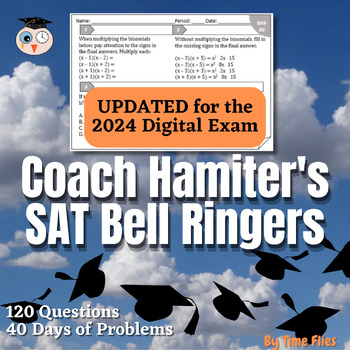
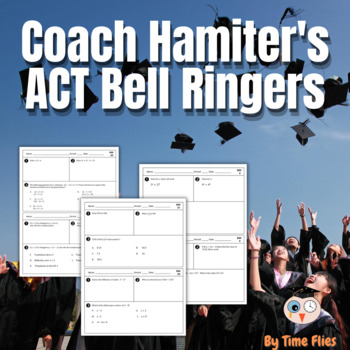
  • #7 – Use bell ringers to prepare students for standardized tests. Not all math teachers think about preparing students for college entrance exams or college placement exams. Your students will be taking tests such as the ACT, SAT, PSAT, TSI or ACCUPLACER. Why not give them a taste of what they will see on these tests? Students are not familiar with the questioning used on these types of tests. What a great service you would be doing for your students if you helped prepare them for what they might see on college entrance exams.

I hope I’ve given you some ideas. To me, bell ringers are another learning opportunity. To provide the best thing for your students, you need to think about your particular groups. My Algebra students need something different than my Geometry students most of the time. The only time that I may give them the same bell ringers is if I’m in the mode of preparing them for the TSI or PSAT.

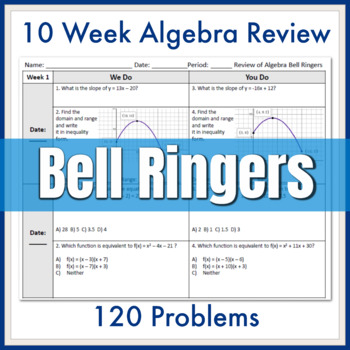
My biggest concern for my Geometry students is how much Algebra they lost last year. I created an Algebra bell ringer resource just for them. When I’m doing these bell ringers with them, I’ll ask them to raise their hand if they remember certain things. It’s terribly disappointing how little they learned last year. I’ll link this resource below if you are interested, but here is a freebie related to those bell ringers. Each day there are four problems. I work two with them and then they do two on their own.

Your next question might be, should you grade bell ringers? I usually grade on completion. I have students keep the bell ringers in their journals, so sometimes during a journal check, I might refer back to certain bell ringers and ask them questions about them.

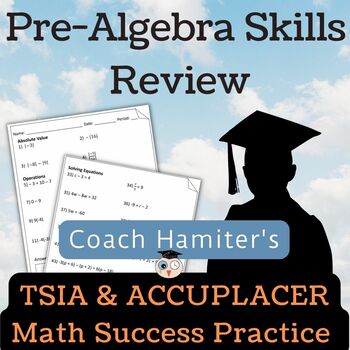
I’ve attached some of my bell ringers below that are in my TpT store. Half the battle is having time to create them. Remember, bell ringers do not have to be something you create. It can be an old worksheet that you didn’t get to or it can be review material that you have. I’ve used my TSI material a lot as bell ringers. I’ll pull a page out of a lesson and it will become my bell ringers for the week. The great thing about TSI or ACCUPLACER material is that it covers a variety of content that students should know from past math classes.

Here’s what I’m currently using with my Geometry Classes:

These next two resources are for college entrance exams:

I use any of my TSI resources to pull from for various reasons. I recently pulled from this activity for my Algebra class bell ringers to help recycle previous concepts:

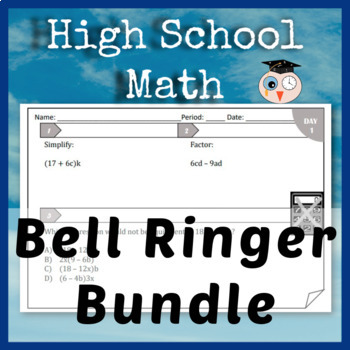
I have all of my bell ringers including in one bundle so you can save:

If you like my ideas and tips, then consider joining my email list. If you chose to do that, then you will receive a free exponential function hands-on activity. Join Now!

Good luck with your bell ringers. If you are not on board, I understand. I have my reservations at times too. You need to do what is best for your situation.

Please follow me at my TpT Store so that you know when I upload new resources. All my new resources are 50% off for 24 hours.