Did you know that the average SAT math score is barely above 500 the past few years? Preparing for the SAT Math Test can feel overwhelming for both students and teachers. With so much content to cover, finding resources that are comprehensive, easy to use, and effective is essential. That’s why I’ve created my SAT Math Practice Sets—a collection of worksheets designed to target the key areas tested on the SAT. These practice sheets are a powerful tool for students preparing for test day and for teachers looking to build confidence and skills in their classrooms.
What Are the SAT Math Practice Sets?

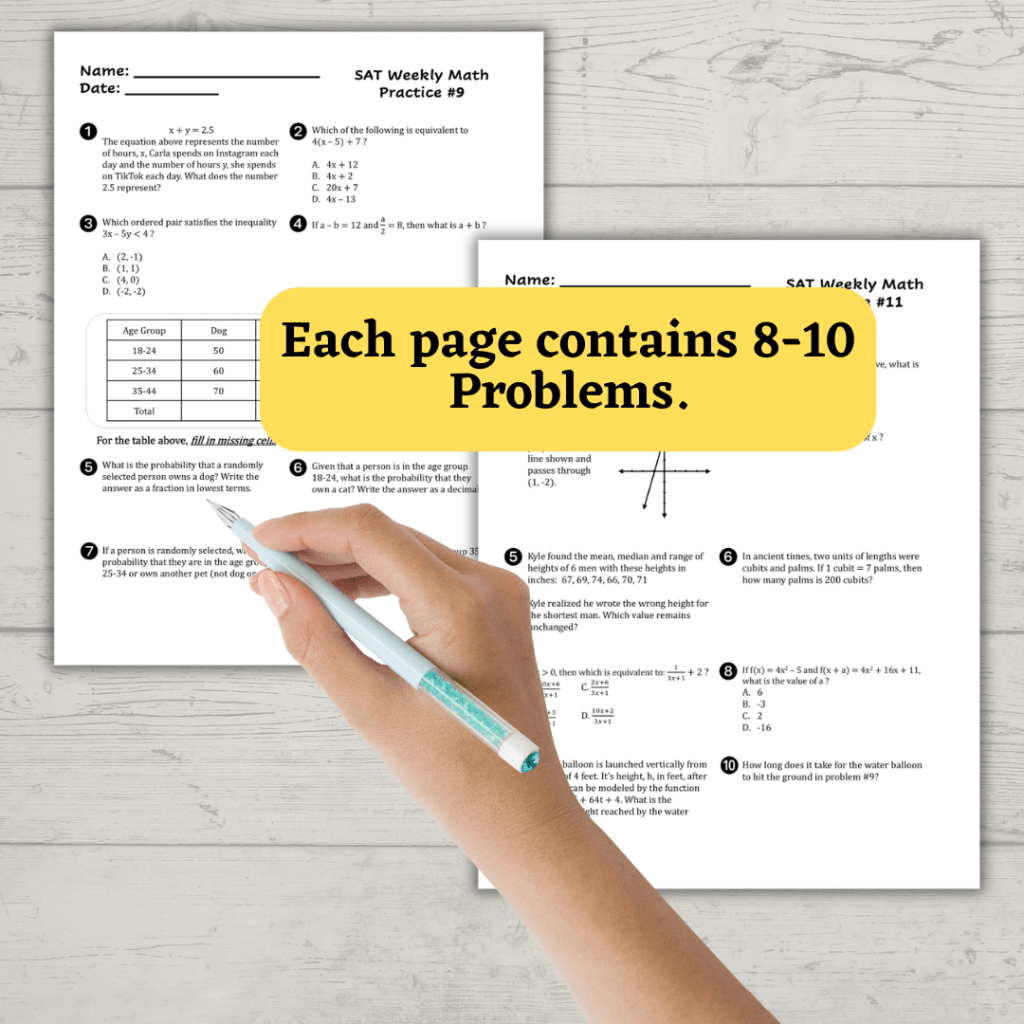
Each SAT Math Practice Set contains six worksheets with carefully curated problems that align with the four categories tested on the SAT Math section:
- Algebra: Linear equations, systems of equations, and quadratic functions.
- Advanced Math: Polynomials, rational expressions, and nonlinear systems.
- Problem Solving & Data Analysis: Data interpretation, probability, and real-world applications.
- Geometry & Trigonometry: Triangles, circles, volume, and trigonometric ratios.
The problems range in difficulty, from basic to advanced, mimicking the progression of questions students will face on the test. Each worksheet includes a mix of multiple-choice and free-response questions to provide a well-rounded practice experience.
What Makes These Practice Sets Special?
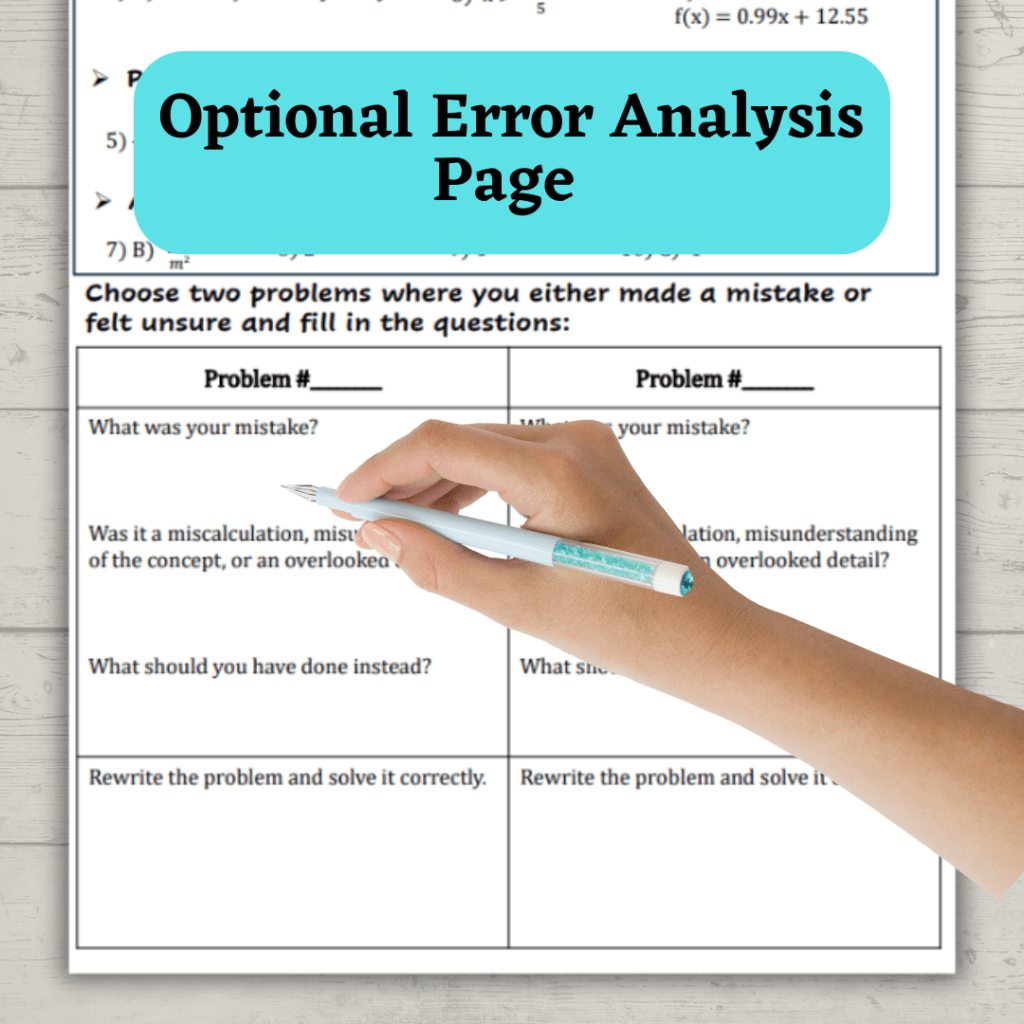
- Detailed Answer Keys: Each set includes step-by-step solutions for every question. This helps students learn from their mistakes and ensures teachers can easily guide their students through challenging problems.
- Error Analysis: Students are encouraged to reflect on their errors, identify patterns in their mistakes, and learn strategies to avoid them in the future.
- Test-Like Practice: The questions are formatted and styled after real SAT questions, so students can familiarize themselves with the test’s structure.
- Progressive Difficulty: Each worksheet increases in difficulty, helping students build confidence as they master foundational skills and tackle more advanced concepts.
How to Use These Practice Sets
Here are a few ways you can use the SAT Math Practice Sets in your classroom or at home:
- Daily Warm-Ups: Start each class with a few problems to get students thinking critically and practicing consistently.
- Weekly Homework: Assign one worksheet per week to keep students on track with their SAT prep.
- Group Activities: Have students work in small groups to solve problems and present their solutions to the class.
- Tutoring Sessions: Use these sheets during SAT prep sessions to target specific areas where students need improvement.
- Self-Paced Practice: Encourage students to work through the sheets at their own pace, using the answer keys and error analysis sections to guide their learning.
Why SAT Math Practice Matters
Success on the SAT Math Test isn’t just about knowing formulas and equations. It’s about developing problem-solving skills, understanding how to approach different question types, and managing time effectively. These practice sets are designed to help students build those skills while giving teachers an easy-to-implement resource to support their instruction. Here are the sets that I’ve made so far: SET 1 and SET 2.
What’s Next?
I’m working on additional practice sets to expand the collection. My goal is to provide even more targeted practice for specific topics and introduce new question formats to align with the digital SAT. Stay tuned for updates and new resources!
Whether you’re a teacher helping students prepare for college entrance exams or a student working toward your best score, these SAT Math Practice Sets are here to make the journey easier and more effective. Check them out today and see the difference they can make in your SAT prep!
Have questions or suggestions? Drop them in the comments below—I’d love to hear how you’re using these resources in your classroom or at home!






 Time Flies Edu