Points of Concurrency: Connecting Geometry & Algebra

As educators, we’re always juggling – trying to cover a mountain of curriculum while making sure our students really understand the core concepts. And sometimes, we stumble upon those topics that make us wonder, “Is this really essential?” Points of concurrency and special segments in triangles often fall into this category. They can seem a bit intimidating, and let’s face it, we’re often pressed for time. So, should we teach them? Skim them? Skip them entirely?

Let’s explore this geometric puzzle, considering curriculum needs, the value of these concepts, and some practical strategies for teaching them effectively.
Why These Concepts Matter

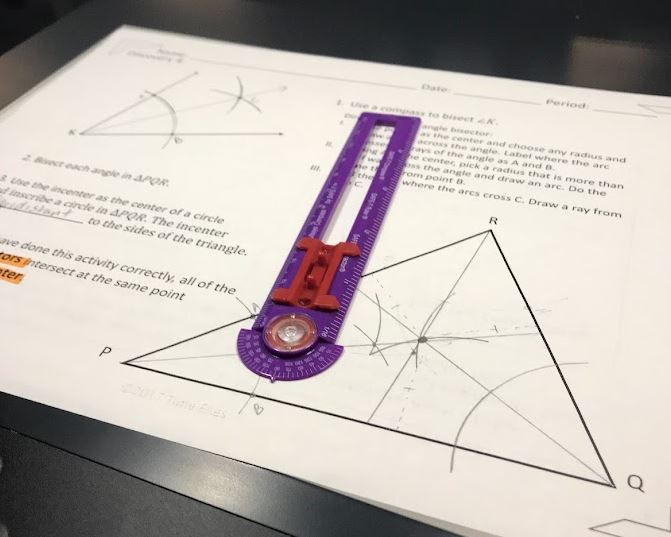
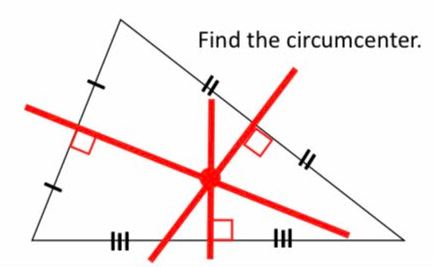
Points of concurrency (like the centroid, incenter, circumcenter, and orthocenter) and their related segments (medians, angle bisectors, perpendicular bisectors, and altitudes) are more than just geometric trivia. They deepen students’ understanding of triangles and provide a fantastic opportunity to reinforce essential algebra and coordinate geometry skills.

Think about it: Finding midpoints to construct medians? That’s a direct link to the midpoint formula! Exploring perpendicular bisectors? Hello, slope and linear equations! These connections help students see the bigger picture of math, where different concepts intertwine and support each other.

To Teach or Not to Teach…That is the Question!

Of course, before diving in, it’s crucial to check your state’s curriculum requirements. Texas educators, you’re in luck – these topics are explicitly included in your standards. But that’s not the case everywhere. Even if these concepts aren’t mandated, incorporating them (even in a simplified way) can enrich your students’ geometric understanding and strengthen those all-important algebra connections.

Time-Saving Strategies for Busy Teachers

Okay, let’s be real. We’re all short on time. If you’re feeling the curriculum crunch, here’s how to approach these concepts efficiently:

  • Keep it concise: Focus on definitions, basic constructions, key properties, and simple applications. No need to get lost in the weeds!
  • Link it to algebra: Highlight those connections to the midpoint formula, slope, etc. – it’s built-in review!
  • Get hands-on: Ditch the lengthy lectures and opt for interactive activities. Dynamic geometry software like GeoGebra or Desmos is your friend!

Quick Activity Ideas:

  • Software exploration: Let students construct triangles and explore those points of concurrency virtually.
  • “Find the Center” challenge: Give clues about a specific point of concurrency and have students play detective.
  • Real-world connections: Briefly touch on how these concepts are used in architecture or engineering.

By keeping it focused and engaging, you can make these concepts accessible even with limited time.

Beyond Geometry: Expanding the Horizons

Here’s the cool thing about points of concurrency and special segments: they can bridge the gap between different math topics. Imagine your Algebra 2 students revisiting systems of equations through the lens of triangle properties. Or your geometry students solidifying their coordinate geometry skills. It’s all about making connections and deepening understanding.
Ready for a Deep Dive?

While simplifying is helpful, sometimes you want to go deeper. If you’re looking for a comprehensive and engaging resource, check out “Points of Concurrency Lesson and Project.” This resource provides hands-on activities, real-world applications, and a chance to reinforce those crucial algebra skills. It’s a fantastic way to provide a more in-depth and enriching learning experience.

Wrapping It Up

Whether you simplify, integrate, or (occasionally) skip, remember that a well-rounded mathematical education is key. Points of concurrency and special segments, while sometimes overlooked, offer valuable learning opportunities. By approaching them thoughtfully, you can equip your students with the skills they need to succeed in their mathematical journeys.extend beyond the classroom.

Math Events and Phenomenon in 2024 For Your Secondary Classroom

In our pursuit of enhancing math education, let’s look into engaging activities that bring real-world events into your classroom. I’d like to explore some noteworthy occasions in 2024—Leap Year, Pi Day, and the Total Solar Eclipse (to name a few) — and how to seamlessly integrate them into your math lessons.

Leap Year

Leap years serve the purpose of aligning our calendar with Earth’s orbit around the sun. Picture this: a year clocks in at around 365.25 days. Without those periodic additional days, our calendar would gradually veer out of sync with the solar orbit.

Leap Year is on a Thursday so it would be a perfect time to throw in some real-life math that day. Here are three suggestions:

  • Leap Year Calculation and Discussions: (I pulled this from https://www.almanac.com/when-next-leap-year) A year may be a leap year if it is evenly divisible by 4.Years divisible by 100 (century years such as 1900 or 2000) cannot be leap years unless they are also divisible by 400. (For this reason, the years 1700, 1800, and 1900 were not leap years, but the years 1600 and 2000 were.)
  • Average Year Length: Examine the average length of a year, accounting for those crucial leap years. For example, if we take a four-year period (which includes one leap year), the average length of a year would be: (365+365+365+366) divided by 4 = 365.25 days
  • Birthday Probability: Inject some practical math by examining the probability of being born on February 29th. The chances of a baby being born on Leap Day is pretty slim: about one in 1,461, as Feb. 29 only comes around once every 1,461 days. And if a baby is born during a Leap Year, the chance of their birthday falling on Feb. 29 is a one in 366 chance (but of course, it all completely depends on when the baby was conceived).

Pi Day and More

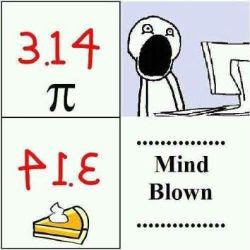
Another event early in 2024 is Pi Day. Each year math enthusiast celebrate this event because of the numbers on the calender: 3/14, but did you know about these other celebrated, but not as well known math days?

  • “e” or Euler’s day which would be on 2/7
  • Palindrome Days which will occur in April in 2024, such as 4/2/24 or 4/21/24 etc.
  • Fibonacci Day: 11/23

My neighbor worked at Lockhead Martin for years and it was a thing to bring pie on Pi Day each year. Of course the engineers at Lockhead would think of that! People in general have embraced Pi Day, so it’s a fun event to celebrate each year.

Here is the activity that I do for Pi Day to refresh area and circumference of circles: Area and Circumference of Circles Coloring Activity

A good activity for Euler’s Day would be one where compounding continuously is explored. I have this activity called: Compound Interest Activity. In my Log Unit, there’s a section on dealing with natural logs, so that would be a nice activity as well.

I have never celebrated Palindrome Days before, but it would be really great to do that in April of 2024. Palindromes’ in general could be explored: words, phrases or numbers.

  • Examples of word palindromes: racecar, level, rotator, civic
  • Example of phrase palindromes: A Santa lived as a devil at NASA
  • Example of a palindrome math problem: 121 X 11 = 1331

Total Solar Eclipse

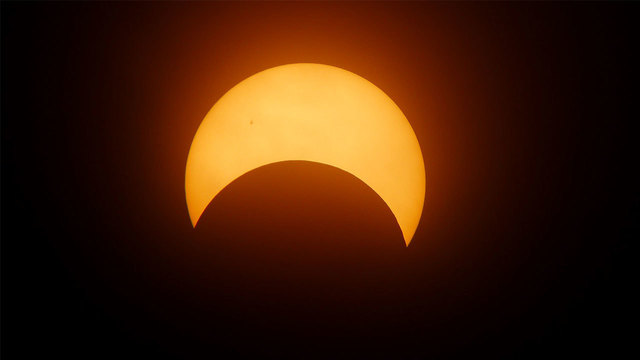
Now let’s discuss the Solar Eclipse that occurs on April 8, 2024 in North America. The path starts in Mazatlan Mexico, passes from Texas to Maine and into the far east of Canada. You can view the path on the NASA site here.

April 8th is a Monday. Start now and think about how you can take advantage of this phenomenon. If you love STEM activities, the sky is the limit (literally)!

If you are planning to take your students outside to see the event, you might want to start journaling about the event. My husband created an Eclipse Journal. The journal helps students explore thought-provoking questions, research tasks, and engaging activities. My husband is a biology teacher and an eclipse enthusiast.

If you aren’t the journaling type, then what can you do on April 8th? Here are some ideas:

1) If you are in the path and have permission, take your class to watch. You must take safety precaustions. Either purchase eclipse glasses, or make eclipse viewer.

2) Not in the path, but still want to watch? Here’s where to see past eclipses and future ones: Exploratorium.

3) Here’s a math challenge called Pi in the Sky from NASA. I hope you find all of this interesting. I know your plate is full, but real life events are a perfect time to show students how math can be used outside of the classroom.

Let’s gear up for a an exciting year in our classrooms. We’ve explored Leap Year, Pi Day, and the Total Solar Eclipse in 2024, but there’s another cool date in the not so distant futre… mark your calendars for a unique mathematical celebration on July 24, 2025 – Pythagorean Theorem Day! No matter where in the world you are or how you write the date, the sum of the squares of the first two digits (7 and 24) perfectly aligns with the square of the year (25). It’s an opportunity to explore the wonders of Pythagoras’ Theorem in a fun and memorable way with your students.

Here’s to a year filled with hands-on learning, real-world connections, and the joy of discovering the wonders of math in everyday life. Wishing you and your students a fantastic and mathematically enriching journey!

Mental Math in Secondary Math Classrooms

Let’s talk about mental math, a skill that holds immense value for our secondary students. Elementary teachers work with students on mental math but in middle school and high school it becomes limited because we have such a broad curriculum to cover and time becomes an issue. As experts in the field of math, we have a unique opportunity to equip our students with the tools they need to thrive academically and in real-life scenarios.

As a high school math teacher, the lack of mental math can become apparent. Here are a few ways that I know a student struggles with mental math:

  • They reach for the calculator to do simple tasks.
  • They struggle with positives and negatives.
  • They do not know multiplication facts.
  • They do not have confidence and avoid responding.
  • They struggle with estimation.
  • They have a lack of number sense.

The SAT is removing its “no calculator section” in 2024, and calculators are becoming increasingly common in everyday life. So why should we still teach mental math?

  1. Mental math is a valuable skill that can help students in many ways. It can improve their speed and accuracy in calculations, and it can also help them develop a deeper understanding of mathematical concepts.
  2. Mental math can help students become more strategic thinkers. When they are faced with a math problem, they need to be able to decide whether to use a calculator or to solve the problem mentally. This requires them to think about the problem carefully and to consider the best way to solve it.
  3. Mental math can help students become more independent learners. When they are able to solve math problems in their head, they don’t need to rely on a calculator or on someone else to help them (this is a dream for a math teacher). This can give them a sense of confidence and accomplishment, and it can also help them become more self-reliant.
  4. Mental math can simply be fun. It can be a challenge to try to solve math problems in your head, and it can be satisfying to be able to do it successfully.

How do we convince students that mental math skills will help them beyond the classroom? The best way is to give them some scenarios of things they could face. The number one thing to get across is that if students do not have good mental math skills, then they can easily be taken advantage of. Mental math can be used in many situations. This is a list of 15 ways students might use mental math in their future endeavors.

  1. Shopping: When shopping, mental math allows you to calculate discounts, estimate total costs, and compare prices to find the best deals without relying on a calculator.
  2. Financial Transactions: Whether you’re receiving change at a store or checking your bank balance, mental math helps you verify that you’re getting the correct amount and avoid errors.
  3. Cooking and Baking: In the kitchen, mental math enables you to adjust recipe quantities, convert measurements, and quickly calculate cooking times.
  4. Budgeting: Mental math skills aid in budgeting finances, helping you track expenses, allocate funds, and plan for future financial goals.
  5. Tip Calculation: When dining at a restaurant, you can easily calculate tips based on percentages, ensuring accurate gratuity without the need for a calculator.
  6. Time Management: In time-sensitive situations, mental math allows you to quickly estimate durations, plan schedules, and manage your time effectively.
  7. Travel Planning: When traveling, mental math helps you convert currency, estimate distances, and calculate time differences between different time zones.
  8. DIY Projects: In home improvement projects, mental math allows you to measure and cut materials accurately and estimate the required quantities of materials.
  9. Fitness and Health: Mental math is useful in keeping track of workout routines, counting repetitions, and monitoring health-related data like calorie intake or heart rate.
  10. Navigation: When driving or navigating through unfamiliar places, mental math aids in estimating distances and travel times between destinations.
  11. Tax and Tip Calculation: While dining out or shopping, mental math helps you quickly calculate total bills, including taxes and tips.
  12. Sharing Expenses: In group settings, mental math facilitates the fair division of expenses among friends or colleagues.
  13. Home Management: In household chores, mental math assists in determining the appropriate quantities of cleaning products, cooking ingredients, or household items to purchase.
  14. Career and Business: In various professions, mental math aids in analyzing data, making financial decisions, and calculating costs, profits, or margins.
  15. Emergency Situations: During emergencies, mental math enables you to quickly assess situations, calculate available resources, and respond effectively.

Let’s talk about how to incorporate mental math into an already busy math curriculum. As a secondary math teacher with limited time, you can efficiently incorporate mental math into your classroom routine with a little planning. Here are a few suggestions.

  • Start each class with a quick mental math warm-up, offering a mix of problems to reinforce concepts and challenge students.
  • Engage your class with math game sessions that focus on mental math skills, making learning fun and interactive.
  • To make mental math relevant, integrate it into real-life scenarios such as budgeting and trip planning.
  • During lessons, include quick discussions and estimation exercises to promote critical thinking.
  • Add an extra station for mental math if you are already doing stations.
  • During transitions times, have students work on a mental math.
  • Talk about mental math on a regular basis!

By nurturing mental math skills, students become strategic thinkers and independent learners. They gain confidence, self-reliance, and a sense of accomplishment. Beyond the classroom, mental math equips them to handle real-world challenges and prevents them from being taken advantage of. From shopping to cooking, budgeting to travel planning, mental math proves indispensable in numerous situations.

Incorporating mental math into our already busy math curriculum requires thoughtful planning and creativity. Utilizing warm-ups, game days, real-life applications, discussions, and peer collaboration, we can seamlessly integrate mental math practice into our lessons. With these concise strategies, we empower our students to master mental math, making them more adept at handling mathematical challenges and better equipped for success in their academic and future endeavors. Let’s embrace the importance of mental math and inspire our students to unlock its power for their benefit and growth.

Teacher Hack: Using File Folders for More Than Filing!

Over the years, file folders have proven to be versatile tools beyond their traditional use. They’re sturdy, easy to label, and even come in various colors for added flexibility. Let me share some practical applications I’ve discovered in my classroom.

Organizing for a sub:

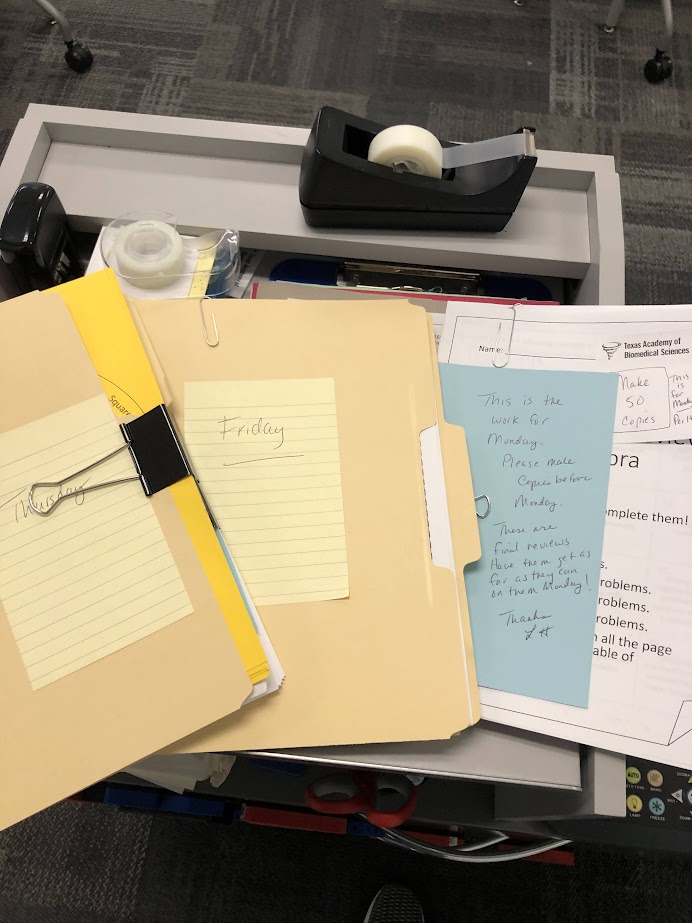
When it comes to ensuring seamless organization during my absences, especially for longer periods with multiple substitutes, I rely on file folders. They provide a simple yet effective method to ensure that substitutes have all they need and can keep everything in order. What’s more, the sub can use the folder to ensure that materials find their way back to me.

Game Boards:

Another innovative use I’ve found is utilizing file folders as a durable game board. One notable example is my “Graphing Lines Games,” which I designed to withstand the test of time. By placing the game components inside the folder, it becomes a portable and storable game board. You can find this game in my store!

Projects:

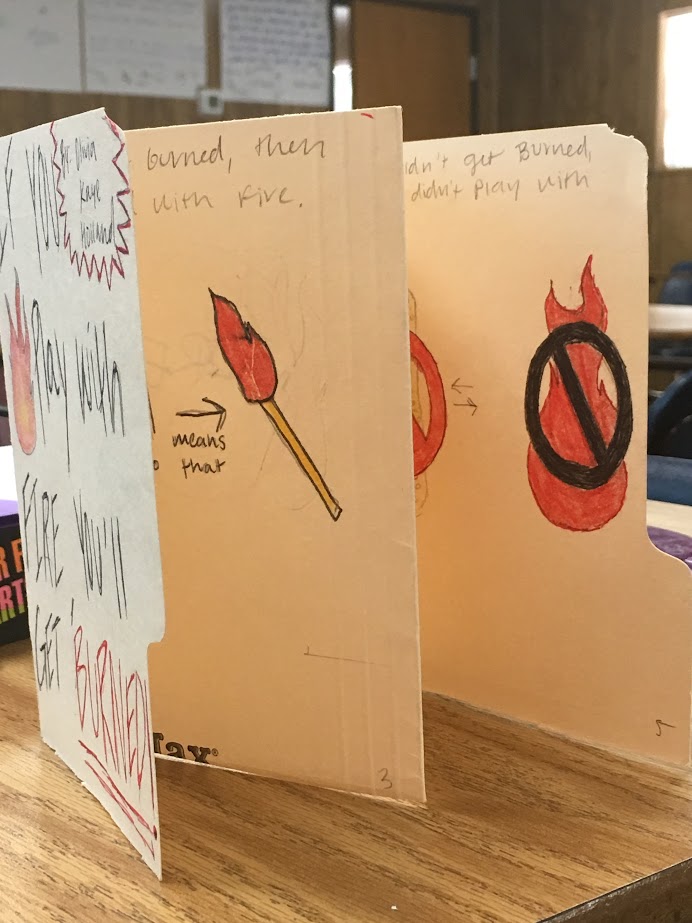
File folders have also been indispensable for various class projects. For instance, I’ve adapted them to create unique booklets for projects like the “If/Then Statement Project Book” and the “Parallel Lines Cut by a Transversal Park Project.” While the “If/Then Statement Booklet” concept isn’t originally mine, I’ve customized it by cutting a folder in half and folding it like a fan, providing each student with a convenient booklet to work on. This approach ensures that everyone has the necessary materials, and it’s quite resource-efficient, with one folder serving two students.

One of the most beloved projects among my students is the “Parallel Lines Cut By a Transversal Park Project.” While I’ve typically used poster paper for this project, one year, I decided to experiment with file folders. This switch allowed students to easily transport their projects between school and home. Despite the unconventional material, the manila folder’s color works exceptionally well for students to express their creativity with various colors. The end result is a project that’s both practical and visually appealing.

The video below shows the project in the folder!

Sturdy Holder:

Here’s one last way that I used a file folder as a tool. This was a desperate attempt to teach some of my low level students how to solve equations. I made it a station.

In conclusion, it’s amazing how a simple file folder can transform our teaching and organizational methods. Whether it’s ensuring smooth sailing during your absence, creating durable game boards, or facilitating engaging class projects, these unassuming tools have proven their worth time and time again. As educators, we’re constantly adapting and innovating, finding new ways to make learning more efficient and enjoyable for our students. So, don’t hesitate to explore the possibilities of file folders in your classroom. Who knows what creative solutions you’ll discover? Thank you for joining me on this journey, and I look forward to sharing more insights and tips. Don’t hesitate to comment and below and share some of your own unique ideas!