When I was in the classroom, few things made as big of a difference as my seating chart. Not just for management—but for focus, behavior, and student growth.
If your students are off task, chatting too much, or not performing the way you expected… seating might be the quiet fix you didn’t know you needed.
How I Started the Year
On the first day of school, I always placed students in alphabetical order.
I kept that same chart for the first six weeks. Why?
- It helped me learn names quickly
- It gave me time to observe student behaviors and learning needs
- It revealed who worked well together—and who definitely didn’t
By the end of that first grading period, I had a mental map of:
- Who was quiet or loud
- Who struggled to stay organized
- Who needed to sit near the front to see or hear better
- Who would need extra support for academics or behavior
Pairing with Purpose
As the second six weeks began, I moved from alphabetical seating to purposeful partner pairs.
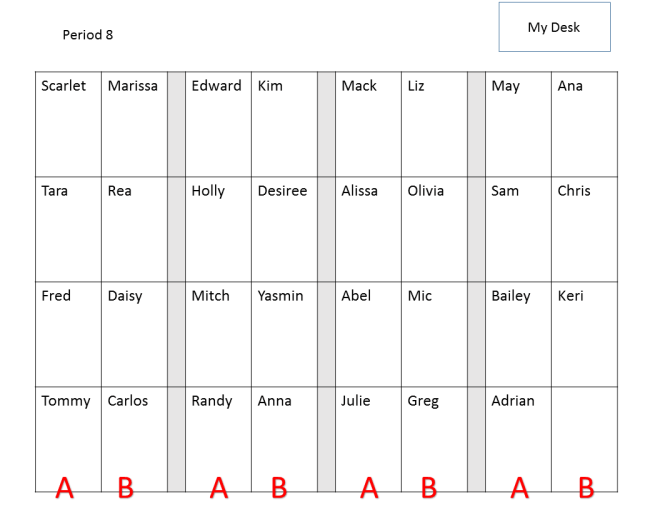
I kept desks in rows, but created 8 rows with 4 seats per row. Yes, it was tight. But the structure worked.
When pairing students, I considered:
- First six weeks grades (I often matched a high with a low)
- Special education and behavior needs
- Personality clashes or friendships that could become distractions
- Physical space needs (for example, a student with a large backpack got a far-side seat)
I also moved students who had failed the first six weeks closer to my desk or into the front row for extra visibility and support.
One Trick That Saved My Sanity
I’ll admit it—I couldn’t stand when desks drifted out of position. So I put tape marks on the floor. Each row had a reference point, and the student in the front knew to reset it before leaving.
It was a small system, but it made a big difference in how calm and ready the room felt each period.
Built-in Talk Routines
Once students were paired, I labeled rows—A and B—to create quick verbal tasks:
“A, tell your partner what perpendicular means. B, respond with a definition of parallel.”
These routines gave students regular chances to speak the language of math out loud. No extra prep for me—just built-in thinking practice.
Why I Gave Up on Free Seating
At one point in my career, I gave students total freedom: they chose seats, listened to music, even brought snacks. And it backfired. (Of course…what was I thinking?)
They were too relaxed… and too distracted. That’s when I realized: structure creates space for learning.
Once I took back control, I saw a huge shift in focus, engagement, and performance.
Small Shifts, Big Flexibility
After the second six weeks, I kept evolving the setup. The paired rows made it easy to shift into groups of four—just have the first and third seats of each row turn their chairs around.
Some of my favorite group activities were:
- Group Quizzes – Sample: Finding Slope from Graphs
- Poster Activities – Sample: Exponential Functions Poster Activity
- Peer Collaboration Activities – Sample: Compound Interest Activity
And yes—this is when my supply boxes became super helpful.
Sometimes I’d place them at each group of four, or scatter them around the room when students worked in pairs.
(If you haven’t seen my supply box system, check it out here).
The Bottom Line:
Seating is more than a classroom management tool. It’s a system that sets the tone, supports your teaching goals, and creates space for intentional learning.
Want better focus? Start with the seats.


 Time Flies Edu