Easy-to-Use SAT Math Practice Sheets for Teachers and Students

Did you know that the average SAT math score is barely above 500 the past few years? Preparing for the SAT Math Test can feel overwhelming for both students and teachers. With so much content to cover, finding resources that are comprehensive, easy to use, and effective is essential. That’s why I’ve created my SAT Math Practice Sets—a collection of worksheets designed to target the key areas tested on the SAT. These practice sheets are a powerful tool for students preparing for test day and for teachers looking to build confidence and skills in their classrooms.

What Are the SAT Math Practice Sets?

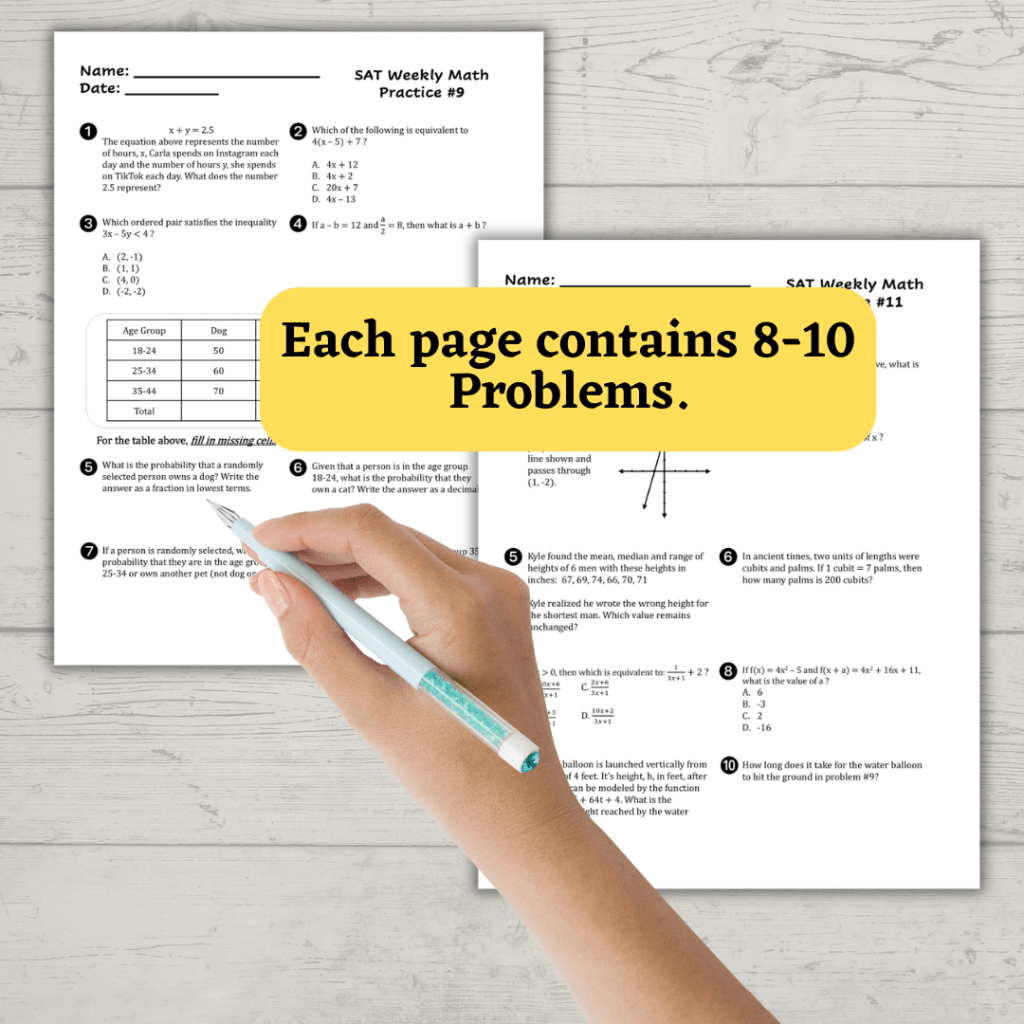
Each SAT Math Practice Set contains six worksheets with carefully curated problems that align with the four categories tested on the SAT Math section:

  • Algebra: Linear equations, systems of equations, and quadratic functions.
  • Advanced Math: Polynomials, rational expressions, and nonlinear systems.
  • Problem Solving & Data Analysis: Data interpretation, probability, and real-world applications.
  • Geometry & Trigonometry: Triangles, circles, volume, and trigonometric ratios.

The problems range in difficulty, from basic to advanced, mimicking the progression of questions students will face on the test. Each worksheet includes a mix of multiple-choice and free-response questions to provide a well-rounded practice experience.

What Makes These Practice Sets Special?
  1. Detailed Answer Keys: Each set includes step-by-step solutions for every question. This helps students learn from their mistakes and ensures teachers can easily guide their students through challenging problems.
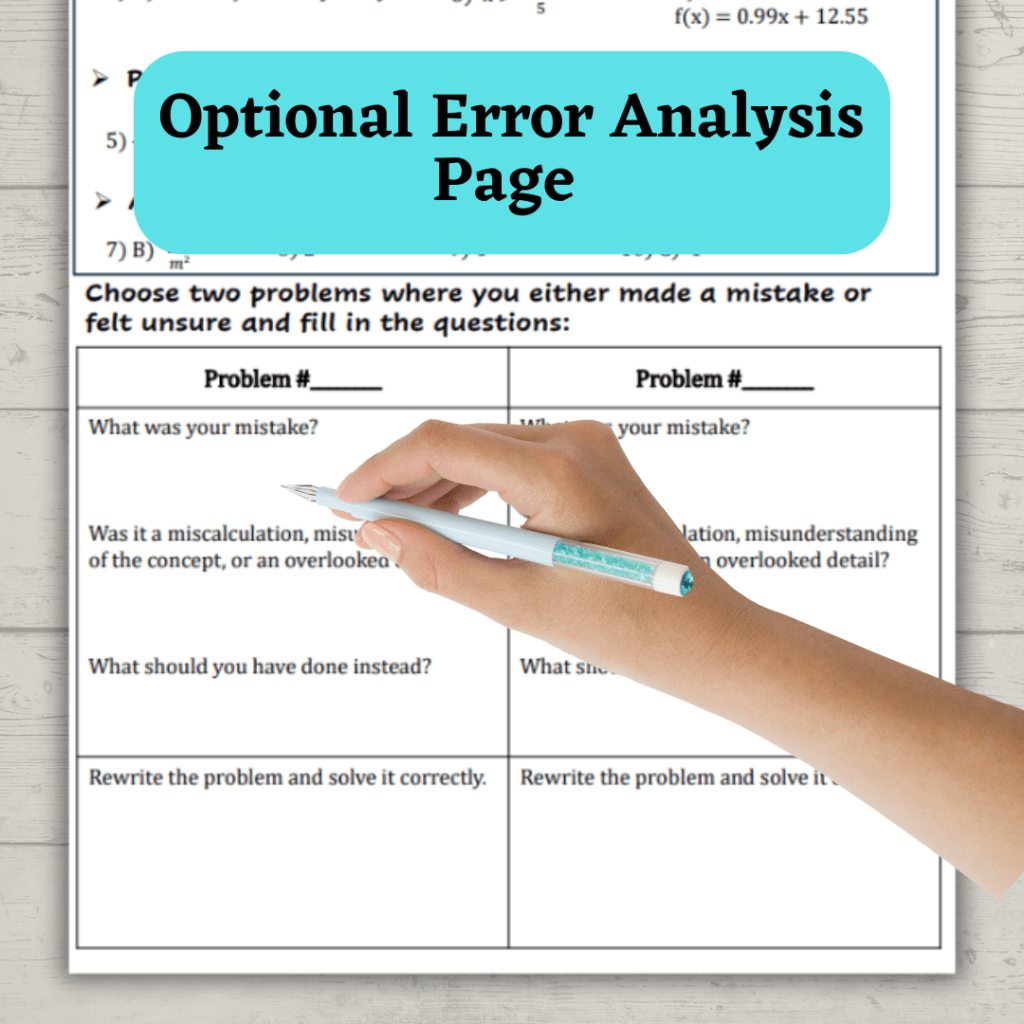
  2. Error Analysis: Students are encouraged to reflect on their errors, identify patterns in their mistakes, and learn strategies to avoid them in the future.
  3. Test-Like Practice: The questions are formatted and styled after real SAT questions, so students can familiarize themselves with the test’s structure.
  4. Progressive Difficulty: Each worksheet increases in difficulty, helping students build confidence as they master foundational skills and tackle more advanced concepts.

How to Use These Practice Sets

Here are a few ways you can use the SAT Math Practice Sets in your classroom or at home:
  1. Daily Warm-Ups: Start each class with a few problems to get students thinking critically and practicing consistently.
  2. Weekly Homework: Assign one worksheet per week to keep students on track with their SAT prep.
  3. Group Activities: Have students work in small groups to solve problems and present their solutions to the class.
  4. Tutoring Sessions: Use these sheets during SAT prep sessions to target specific areas where students need improvement.
  5. Self-Paced Practice: Encourage students to work through the sheets at their own pace, using the answer keys and error analysis sections to guide their learning.

Why SAT Math Practice Matters

Success on the SAT Math Test isn’t just about knowing formulas and equations. It’s about developing problem-solving skills, understanding how to approach different question types, and managing time effectively. These practice sets are designed to help students build those skills while giving teachers an easy-to-implement resource to support their instruction. Here are the sets that I’ve made so far: SET 1 and SET 2.

What’s Next?

I’m working on additional practice sets to expand the collection. My goal is to provide even more targeted practice for specific topics and introduce new question formats to align with the digital SAT. Stay tuned for updates and new resources!

Whether you’re a teacher helping students prepare for college entrance exams or a student working toward your best score, these SAT Math Practice Sets are here to make the journey easier and more effective. Check them out today and see the difference they can make in your SAT prep!

Have questions or suggestions? Drop them in the comments below—I’d love to hear how you’re using these resources in your classroom or at home!

Points of Concurrency: Connecting Geometry & Algebra

As educators, we’re always juggling – trying to cover a mountain of curriculum while making sure our students really understand the core concepts. And sometimes, we stumble upon those topics that make us wonder, “Is this really essential?” Points of concurrency and special segments in triangles often fall into this category. They can seem a bit intimidating, and let’s face it, we’re often pressed for time. So, should we teach them? Skim them? Skip them entirely?

Let’s explore this geometric puzzle, considering curriculum needs, the value of these concepts, and some practical strategies for teaching them effectively.

Why These Concepts Matter

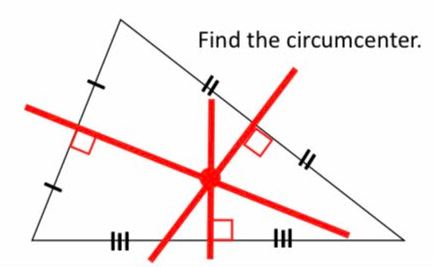
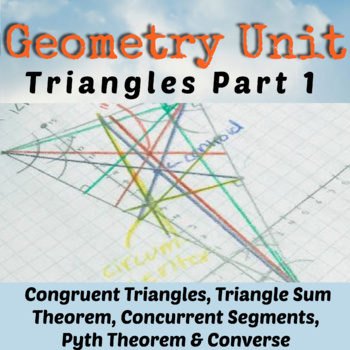
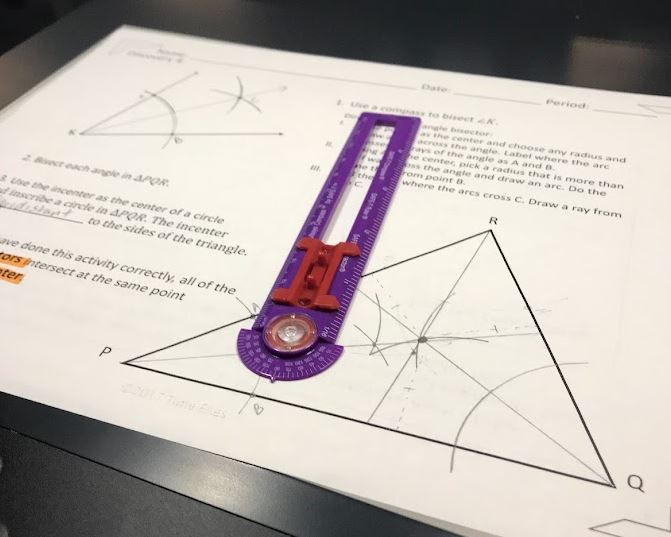
Points of concurrency (like the centroid, incenter, circumcenter, and orthocenter) and their related segments (medians, angle bisectors, perpendicular bisectors, and altitudes) are more than just geometric trivia. They deepen students’ understanding of triangles and provide a fantastic opportunity to reinforce essential algebra and coordinate geometry skills.

Think about it: Finding midpoints to construct medians? That’s a direct link to the midpoint formula! Exploring perpendicular bisectors? Hello, slope and linear equations! These connections help students see the bigger picture of math, where different concepts intertwine and support each other.

To Teach or Not to Teach…That is the Question!

Of course, before diving in, it’s crucial to check your state’s curriculum requirements. Texas educators, you’re in luck – these topics are explicitly included in your standards. But that’s not the case everywhere. Even if these concepts aren’t mandated, incorporating them (even in a simplified way) can enrich your students’ geometric understanding and strengthen those all-important algebra connections.

Time-Saving Strategies for Busy Teachers

Okay, let’s be real. We’re all short on time. If you’re feeling the curriculum crunch, here’s how to approach these concepts efficiently:

  • Keep it concise: Focus on definitions, basic constructions, key properties, and simple applications. No need to get lost in the weeds!
  • Link it to algebra: Highlight those connections to the midpoint formula, slope, etc. – it’s built-in review!
  • Get hands-on: Ditch the lengthy lectures and opt for interactive activities. Dynamic geometry software like GeoGebra or Desmos is your friend!

Quick Activity Ideas:

  • Software exploration: Let students construct triangles and explore those points of concurrency virtually.
  • “Find the Center” challenge: Give clues about a specific point of concurrency and have students play detective.
  • Real-world connections: Briefly touch on how these concepts are used in architecture or engineering.

By keeping it focused and engaging, you can make these concepts accessible even with limited time.

Beyond Geometry: Expanding the Horizons

Here’s the cool thing about points of concurrency and special segments: they can bridge the gap between different math topics. Imagine your Algebra 2 students revisiting systems of equations through the lens of triangle properties. Or your geometry students solidifying their coordinate geometry skills. It’s all about making connections and deepening understanding.

Ready for a Deep Dive?

While simplifying is helpful, sometimes you want to go deeper. If you’re looking for a comprehensive and engaging resource, check out “Points of Concurrency Lesson and Project.” This resource provides hands-on activities, real-world applications, and a chance to reinforce those crucial algebra skills. It’s a fantastic way to provide a more in-depth and enriching learning experience.

Wrapping It Up

Whether you simplify, integrate, or (occasionally) skip, remember that a well-rounded mathematical education is key. Points of concurrency and special segments, while sometimes overlooked, offer valuable learning opportunities. By approaching them thoughtfully, you can equip your students with the skills they need to succeed in their mathematical journeys.extend beyond the classroom.