Posted on — Leave a comment

6 Ways to Keep Your Teaching Life Under Control

You have a ton of assignments to grade, data to decipher, forms to fill out, professional development requirements, students to manage, a club you sponsor and a curriculum to cover. You are drowning and something has got to give. Let’s talk about way to keep your teaching life under control.
Teachers are multitaskers and that’s great, but are you spreading yourself to thin? Your home life does not need to be sacrificed to keep your school life organized. It’s time to get efficient and swim on top of the water! I’ve got some suggestions that will help you manage your responsibilities more easily.

Get a piece of paper and write down what you do on a daily basis at school. Circle the things that need to be done during your planning period. Are you able to complete these tasks? Probably not all of them. There just isn’t enough time. Keep this list in front of you as you continue reading.

Before we get into how to organize your time, think about things that you do that can be eliminated completely. Do you volunteer for too many things? Do you do class activities that require too much prep? What can you start saying “no” to? Don’t feel guilty. Really think about the importance of the items on your list. Is everything on your list a MUST DO task? If not, mark it off and in the future think before signing on for something that is a time-suck.

Let’s get organized! Take a closer look at your list. Are all of these things done every day? Do you need to do some on certain days? I’d like you to organize your list into a weekly plan. You do not have to be detailed. Just jot down 3 – 6 things that have to get done during the week on certain days. Here’s a Google Sheets Planner to use if you’d like.

Congratulations. You have taken the first step toward getting your teaching life in order!

Keep your list handy so that you can check things off as you complete them. During your planning period, put your phone away and forget about it for 30 minutes. You will be amazed at what you can get done. If you tend to get sidetracked, then instead of putting your phone away, set your phone’s timer for 20 minutes and tell yourself that you have to work for 20 minutes before you can get up and do anything else. This works really well when you don’t like the task you are doing. You know you can take a break after 20 minutes. After the 20 minutes is up, then set your timer for 10 minutes and go get a drink or look at your phone or stretch and meditate!

If you need more time to accomplish your tasks you may need to consider some other options:

  • Can you come to school an hour earlier or stay an hour later?
  • Can you put the kids to bed and work an hour at night or get up earlier and work at home?

How do you plan out what you need to teach? This can take a ton of time. To make things go smoother, you will need to arrange a block of time for planning your curriculum. I suggest to plan it out six to nine weeks at a time. Put this information on a calendar and don’t worry about being detailed. Just seeing what you need to teach will take that part of the task off your plate until you plan again for the next block. This might take you a couple of hours, but you only have to do it every few months.

Is grading out of control for you? Do you really need to grade everything? Can the students grade their own work on occasion? Can assignments be graded for completion? Can you grade something quickly by walking around and putting a sticker on the paper and move on? Be creative. You truly do not have to grade every assignment. If you will decide ahead of time what needs to be graded and what does not, you will love your life!

So let’s recap.

  1. Say NO to things that take you away from what you REALLY need to do.
  2. Plan out your week by using a checklist system.
  3. Set a timer when working and stay on task. (Or just put that phone away).
  4. If you need more time, look for an hour here or there that won’t steal time from your family.
  5. Plan your curriculum in 6 – 9 week increments.
  6. Don’t grade everything.

I hope this helps you. Being able to check things off a list is the greatest thing ever.

I hope your stress level decreases and you love your job more and feel great about being so organized!

Good luck! If you are a secondary math teacher and you are interested in receiving tips and freebies, feel free to join my email list.

Posted on — Leave a comment

The Algebra STAAR Dilemma

With COVID still going strong, it’s hard to know how to prepare for the Algebra STAAR exam. Teachers are sick, students are sick, campuses are closing or going virtual. How do you deal with all of this? First, don’t put pressure on yourself. You can only do so much. You can plan and teach the students that are there. That’s it. You are an awesome teacher. Never forget that!

It’s 2022 and we are headed into the second semester of school. I’m wrapping up linear functions in a couple of weeks and I feel pretty far behind. My plan is to give myself at least three weeks before the test to review. I still need to cover exponentials and quadratics. How do I get all of this done? I like to get a calendar and put the test dates on it and mark off the three weeks of review. I look at my school calendar and make sure I know when spring break is and when the English I & II STAAR will be.

***You can get a copy of my planning calendar, so you can make it fit your needs. I’ll attach it at the bottom of this post.

Something new that I’m doing this year is focusing on the free response questions. I’ve created activities that will help students build confidence on the types of problems that they will see on the griddables or fill-in-the-blank problems. My students will take the online STAAR, so I’ve got this Boom Card Activity for them: Algebra STAAR Review Free Response Practice

If your students are taking the paper version of the test, here is the same activity in PDF form: Algebra STAAR Griddable Activity for Paper Version

Here is an outline of my plan. Remember to pick and choose what will work with your schedule!

  • End of Jan: Finish Systems
  • February: Exponent Rules, Geometric Sequences and Exponential Functions (some things in this unit you can omit).
  • Feb 28 – March 4: Algebra Task Cards (These are in the STAAR Bundle) as Bell Ringers or Opening Activity. Polynomials – Mainly multiplying binomials and refreshers on combining like terms and distributive property.
  • March 7 – 11: Continue Task Cards and Factoring
  • March 28 – April 8: Start Taking Task Card Timed Quizzes. Start quadratics using my objective 6, 7 and 8 resources from the Algebra I STAAR Bundle.
  • April 11 – 15: Continue with quadratics and do quick reviews of objectives 4 & 12 (combined these two objectives have only been 3 – 5 questions in the past)
  • April 18 – 22: Reviews of objectives 2, 3 and 9 – I’ll use my STAAR Bundle, but I will pick and choose what I want to use from these objectives. (Bell Ringers will be key features of graphs.)
  • April 25 – 29: Objectives 5, 10 and 11 – I’ll use my STAAR Bundle, but I will pick and choose what I want to use from these objectives. Bell Ringers will be Brain Dump Practice.

Here’s my calendar. Make a copy and then make it work for you!

When all is said and done, I’ll reflect and see how it went.

Please don’t stress out Algebra Teachers! Do what you can. Have a plan and work through the plan. Things will be fine. The students will do as well as they can and we will probably be pleasantly surprised at how well most of them will do. Remember that YOU ARE AWESOME!

Posted on — Leave a comment

Real-Life Exponential Functions

Exponential functions are right around the corner for my math classes. I always look forward to this time of year. The best part about exponential functions is the real-life aspect. Students are more interested if they can make a connection. Draw your students in and they will enjoy this topic without realizing how much they are learning.

One of the first real-life examples that I can think of right now, is COVID-19. Remember when the saying was, “Flatten the curve?” What an interesting thing to talk about with students. A flatter curve means what? A steeper curve means what? What a great thing to talk about!

Here’s a great research letter I found on the CDC website. This has some wonderful references to “doubling time”. The research brings in some formulas and if you look at some of the appendices, it gets pretty technical, but it is fascinating.

The Coronavirus is a topic that I’m sure will get the attention of your students. Another topic that students may not be as familiar, but it is definitely worth mentioning is the stock market. Let your students read this article from Forbes. They may not think the stock market is very exciting, but after reading this article, it might spark some students to consider how they can one day invest in stocks.

A really fun exponential growth activities is the paper folding activity. I’m sure most math teachers have used this when teaching exponential functions. I love that Myth Busters tried to fold a giant piece of paper to see how many times they could fold it. Check out this video below:

We’ve been focused on exponential growth, but what about decay? Carbon dating is a topic that is also fascinating. This article can help students and teachers alike to understand carbon dating a little better: What is Carbon Dating? This might help students understand how scientist can estimate the age of an object. Below is a nice video that explains carbon 14 and half-life.

If you’ve read my blog before, you know how much I love exponential functions. I’m always on the lookout to learn more and find interesting things for my students to do. Below, you’ll find some of my resources that I sell on Teachers Pay Teachers. I’ve got all kinds of exponential function activities to keep your students busy and interested. Go take a look and I hope that you will want to follow my store and join my email list!

Posted on — Leave a comment

Slope and Rate of Change

I was going through a review of slope that I made a couple of years ago. I love this resource! It was created for the 8th grade STAAR, but I feel like all Algebra teachers would love this. Students are supposed to come into Algebra with a concept of slope already! Why do students have such a hard time with it? Slope is a fun and interesting concept and of course ties to so many real-life situations. Let me tell you what this review contains:

Now remember that it is a review of slope! The first page gives the students a picture of a line with four points on the line. The students are asked to find the slope of two different segments along the same line, two different ways. The picture also has two right triangles drawn that were created from using the endpoints of the segments. Students that already have a concept of slope should be able to think of several ways to find slope. I love this so much. On top of that, shouldn’t the slopes be the same and the two triangles created are similar. Hopefully students will have that Ah-ha moment!

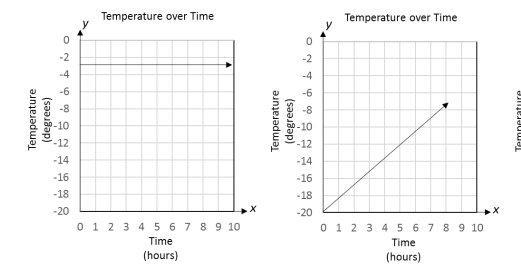
The next two pages have the students interpret the meaning of slope by matching a situation to a graph. The students are thinking of slope as a rate of change and having a proportional relationship. I love the different graphs. Teachers could ask the students to find the slopes of all of the graphs first before trying to match them to the situation. Students are asked to explain why the graphs they did not choose are incorrect. Having students explain their reasoning is always important in math.

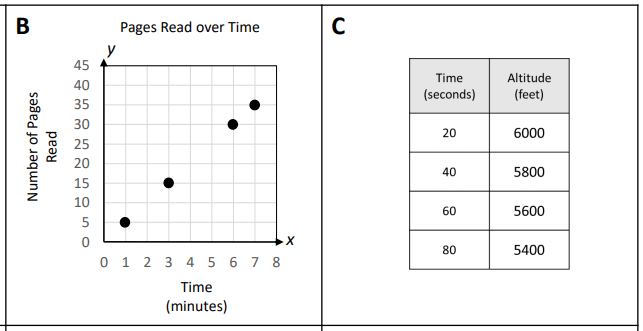
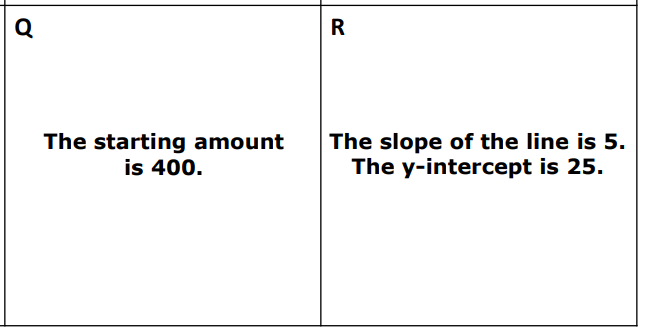
The next four pages are a set of 24 matching cards. 12 of the cards have either a graph or a table. The other 12 cards display a slope, y-intercept or another way of identifying that it matches one of the graph or table cards. This activity is engaging and students have to know what they are doing!

Finally, the last page in this resource is something that I have consistently placed in every 8th grade STAAR resource. I call it Smath’s Problem. It is an activity that reviews several of the topics in the resource. It is interesting and students enjoy working through the situation. It can be used as an assessment or a group activity.

I think you’ll enjoy this resource. All of the answer keys are included. Take a look if this sounds interesting!

Posted on — Leave a comment

Texas Success Initiative Assessment in Math 2.0

The new version of the Texas Success Initiative comes out in January. As far as the math goes, there is nothing new on the test. Students will still get a 20 question test, but if they don’t score high enough on that part, they get a second chance to pass it during the diagnostic portion.

If you want to know more about the test, the best place to go is to the Texas Higher Education Coordinating Board. This site is full of information. The specific TSI part is hard to find, so click here and you’ll go right to it.

Why should high school English and math teachers be interested in this? Students must pass the TSIA to take college English and math classes. This includes dual credit math and English classes. The only way students do not have to take the TSIA is if they score high on the SAT or ACT before they are starting their college-level classes.

The math portion covers 4 main areas:

  • Quantitative Reasoning
  • Algebraic Reasoning
  • Geometric and Spatial Reasoning
  • Probabilistic and Statistical Reasoning

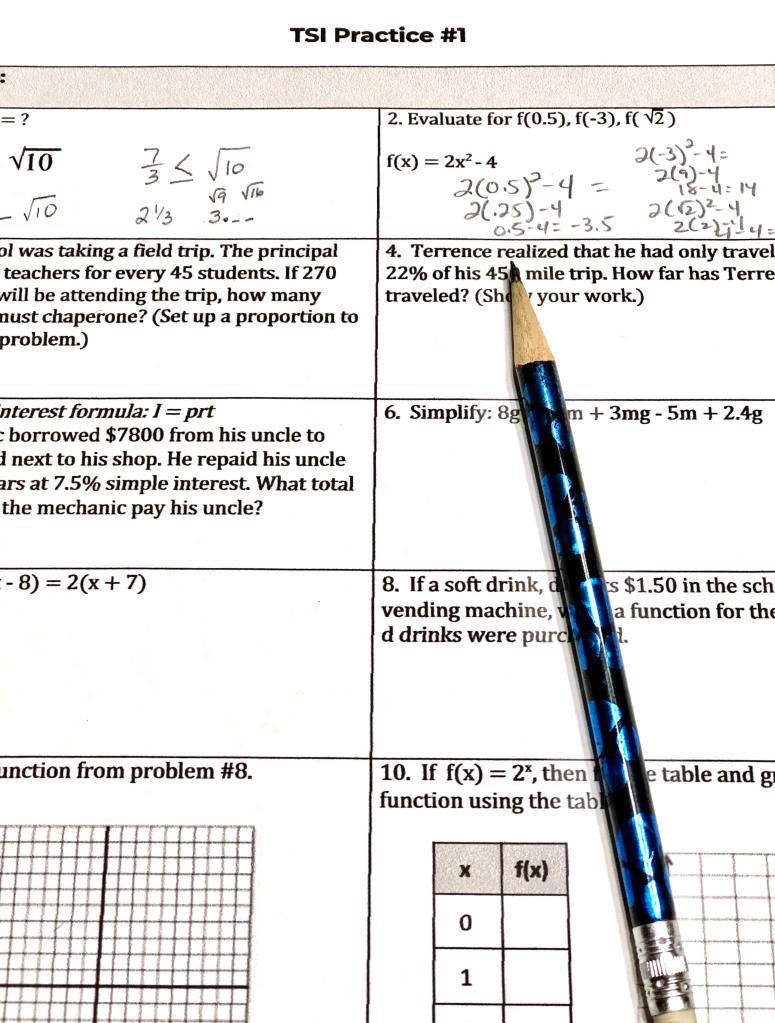
I’ve created 6 practice sheets that mimic the College Ready portion of the test which is the 20 question test. Each practice sheet has 20 questions. The first 6 cover quantitative reasoning, the next 7 cover algebraic reasoning, the next 3 over geometric and spatial reasoning and the last 4 cover probabilistic and statistical reasoning. If your students struggle on any part of them, then I have other TSI resources that will help them further.

Here’s a pic of one of the sheets:

If you are not a Texas teacher and just need some good overall reviews for your ACCUPLACER class or your junior or senior math classes, these practice sheets would come in handy!

Go check this resource out or if you are interested in getting all the TSI materials, then check out the bundle!

Posted on — 1 Comment

Parallel Lines, Perpendicular Lines and Transversals

Why are parallel lines, perpendicular lines and transversals so important in Geometry? Have you thought about it? Why is this taught early in the geometry curriculum? Geometry is the study of shapes. How are shapes made? Yep, with lines or line segments to be more exact.

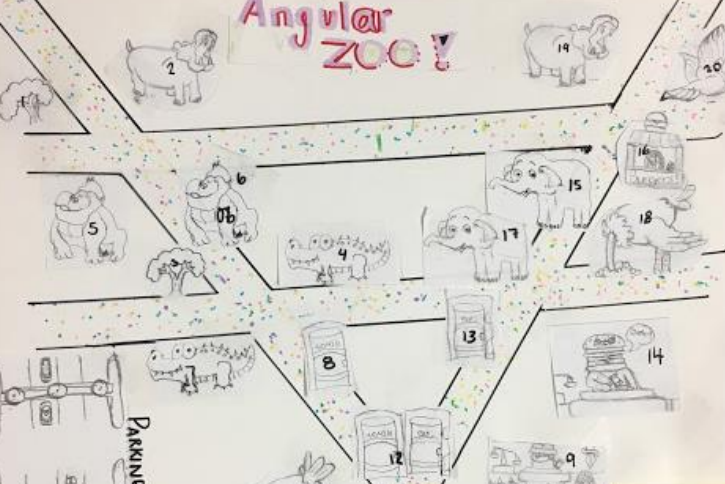
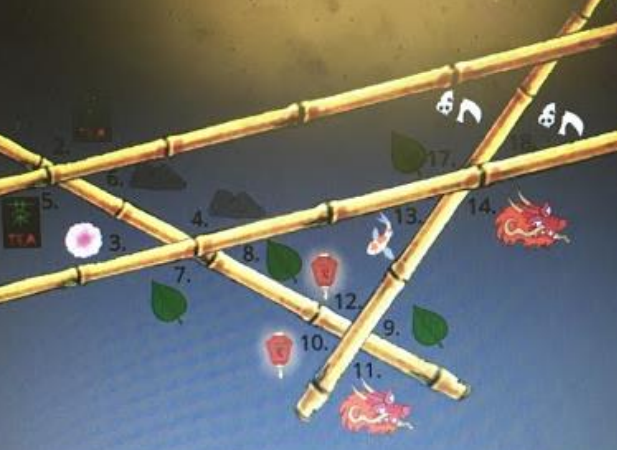
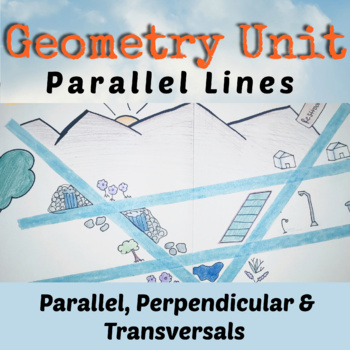
The whole time I’m teaching students about parallel lines and transversals, I’m constantly saying that this idea will return when we are dealing with future topics. One of my activities in fact, puts the converse of the postulates and theorems learned during this time into perspective. I ask the students to draw over the segments that make up the shapes to notice how parallel lines and transversals are involved. See below:

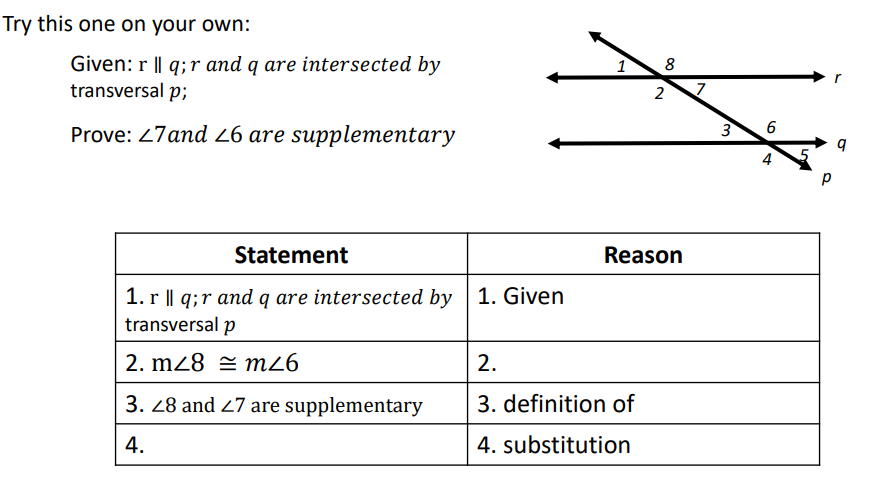
The resource with the above worksheet has a ton of hands-on activities. Students measure angles and discover which types of angles are congruent and which types of angles are supplementary. Parallel Lines and Transversals {with Project} is the name of this activity. It has a ton of engaging worksheets, notes, proofs and comes with a project and a short quiz.

Before I give my quiz over this lesson, I have the students do a Boom Card review. If you know me, then you know I love Boom Learning. This activity has 20 problems and students can redo them as many times as you will allow. It’s a great way to reinforce learning.

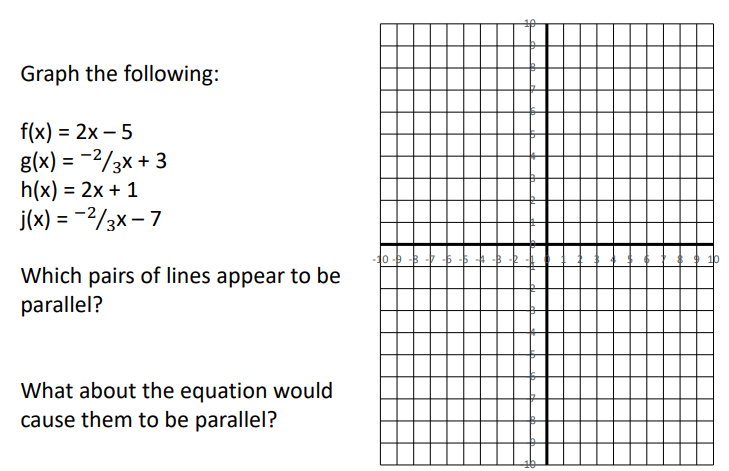
After the project, I specifically focusing on parallel and perpendicular lines. I love this lesson and the one over parallel lines and transversals so much because it gives me insight into the algebra skills of my students. After the transversal lesson, I have a good idea of who struggles solving equations. After the parallel and perpendicular lesson, I have a good idea on who struggles with the following major algebra concepts:

  • graphing
  • solving for y and understanding slope-intercept form
  • slope
  • using the slope formula,
  • plugging into point slope-form

It’s nice to help students with their algebra skills, but as far as geometry goes, why do they need to know when lines are parallel and perpendicular? The answer is the same as previous…shapes. This time we are learning about lines on a coordinate grid. If we notice lines are parallel or perpendicular, then in future lessons, we will know if a shape is a parallelogram, rectangle, square or even a right triangle. This Parallel Lines and Perpendicular Lines lesson could be used in an algebra class or a geometry class but I love how these two contents come together in this lesson!

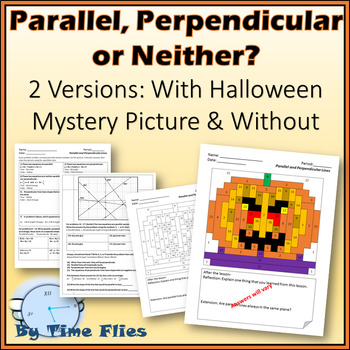
I have a set of Boom Cards for this lesson too that I call: Parallel, Perpendicular or Neither?

This activity usually falls around Halloween for me, so I’ve also created a Halloween activity that is super fun. It comes without the Halloween theme if you prefer. It’s a nice way to reinforce this learning!

This unit is so important because it plants the foundation for many future topics. I think that it is so important that we as teachers understand where topics are headed. Sometimes, it is not related to anything else in our subject, but it needs to be taught for future years. If you have only taught Algebra or Geometry, I highly suggest that you reach out to your principal and ask to teach Algebra 2 and Pre-Cal and even Calculus if you get a chance. It is eye-opening! Algebra and Geometry are so important in these other subjects. I learn new things and how they are applied all the time. I see things that I teach my students right now and how useful they are in my son’s college engineering classes. It’s exciting to see how important our teaching really is.

If you are interested in all of these resources in one bundle, click on the picture below. Thank you for all you do and have a great school year!

Posted on — Leave a comment

Inequalities in Algebra

I’ve been fascinated by inequalities lately. I always find it interesting how students tend to get them backwards. I feel like they learn some bad habits and have some misconceptions about inequalities before they get to Algebra. It’s hard to get them out of those habits.

I’ve heard my students say that you always shade in the direction that the inequality is pointing. Because of this situation, I try to get them used to switching the inequality if the x is on the right side of it. This really is not an easy concept for them and I think it’s because they really do not understand what’s happening.

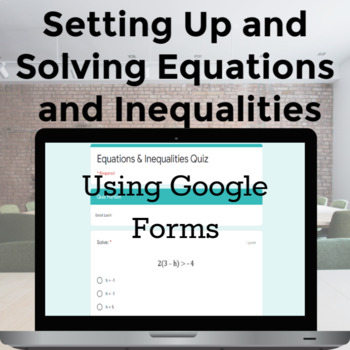
What is this sign? What does it really mean? Why do I switch it sometimes and not at other times? These questions are hard. I developed a lesson where the students do a discovery of what causes the inequality to switch directions. As they are solving problems in the Google Sheets activity a picture is evolving. The kids can’t wait to finish to see what the picture becomes.

The rest of the activity is setting up, solving and graphing inequalities. To see if students truly do understand, I ask them to either show work or explain their steps. This is really challenging for many students. It’s interesting to see if they truly know what they are doing.

I have several activities that go nicely with this one. Check out the resources below:

Posted on — Leave a comment

Holiday-Themed Math Activities to Brighten Your Classroom

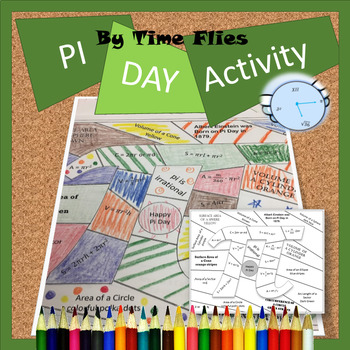
You know, it’s always a blast to incorporate a holiday theme into math activities. It adds a touch of excitement and makes learning even more enjoyable. That’s why I’ve gathered all of my holiday math resources in one place. And the best part? I’ll keep adding more as I create them.

Whether you’re gearing up for Thanksgiving, Christmas, Valentines or any other season, you’ll find a variety of math resources that your students will love. Each of these activities is designed to make learning math not just educational but also fun.

If you’re curious about a specific activity, simply click on it. This will take you to my Teachers Pay Teachers store, where you can read a detailed description of the resource. It’s a convenient way to find exactly what you need for your classroom.

The holidays are a wonderful time for creative and engaging teaching. So, go ahead, explore these holiday-themed math resources, and bring the joy of the season into your classroom.

Enjoy finding what you need, and happy teaching!

Posted on — Leave a comment

Expressions in Math

Dealing with expressions is the foundation of Algebra. The tricky part is the basic math that is involved. As a high school teacher, I love using expressions to have students practice their basic skills such as operations with positives and negatives and dealing with decimals and fractions. It doesn’t make sense to me to give my students practice problems that look like this: -5 + 8. I need them to know how to do that problem, but why not make it look like this: -5x + 8x. I also want students to use these expressions in a situation like a perimeter problem or an area problem. All of these things help prepare students for tougher problems and it gets them used to setting up problems themselves. I try to use a variety of resources through the first part of the year in Algebra. My daughter and I have both created expressions activities that can be useful for any math teacher that teaches expressions. Have a look below at two of our favorites:

Posted on — Leave a comment

Different Forms of Numbers

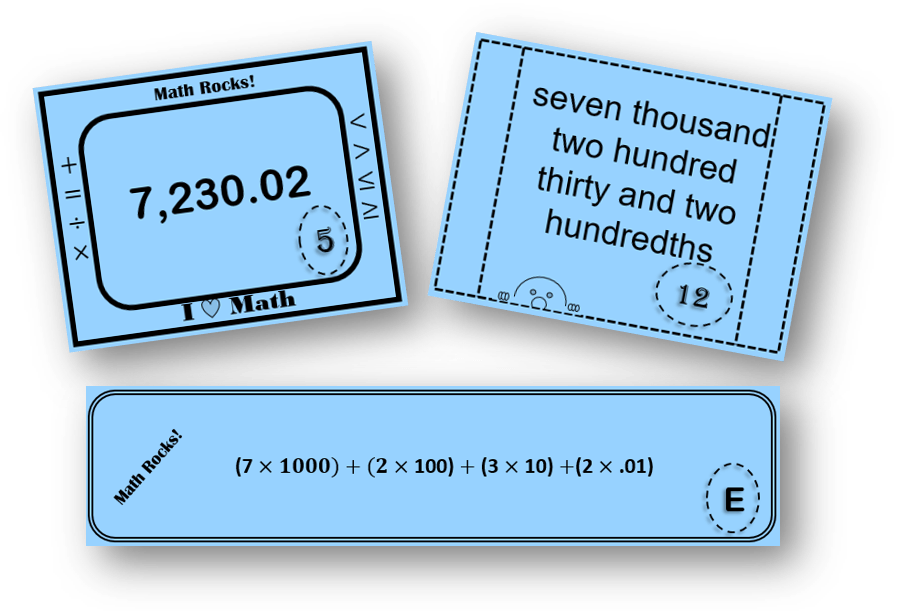
My daughter recently upgraded one of her resources for distance learning. This resource originally had a set of 24 matching cards where the students match a number to the expanded form and to the word form. This is a great activity to see if students understand expanding numbers with decimals and then to see if they know the place values. The resource is called Matching Different Forms of Numbers.

Now she has made this ready for distance learning. She has transformed it into a Google Slides where students will drag and drop to match the various forms.

I love the last question on the Google Slides which is to create the three forms on your own. We love when students have to create. After working 8 different problems, they will be able to follow the examples and create one on their own. I love that.

The matching cards were originally in her Objective 2 5th Grade Math resource. Now the matching cards are separate and can be purchased independently.

Matching cards are fun and use lots of brain power. If you teach elementary math, go check this activity out to see if it is something you would like to add to your curriculum.