The new version of the Texas Success Initiative comes out in January. As far as the math goes, there is nothing new on the test. Students will still get a 20 question test, but if they don’t score high enough on that part, they get a second chance to pass it during the diagnostic portion.
If you want to know more about the test, the best place to go is to the Texas Higher Education Coordinating Board. This site is full of information. The specific TSI part is hard to find, so click here and you’ll go right to it.
Why should high school English and math teachers be interested in this? Students must pass the TSIA to take college English and math classes. This includes dual credit math and English classes. The only way students do not have to take the TSIA is if they score high on the SAT or ACT before they are starting their college-level classes.
The math portion covers 4 main areas:
Quantitative Reasoning
Algebraic Reasoning
Geometric and Spatial Reasoning
Probabilistic and Statistical Reasoning
I’ve created 6 practice sheets that mimic the College Ready portion of the test which is the 20 question test. Each practice sheet has 20 questions. The first 6 cover quantitative reasoning, the next 7 cover algebraic reasoning, the next 3 over geometric and spatial reasoning and the last 4 cover probabilistic and statistical reasoning. If your students struggle on any part of them, then I have other TSI resources that will help them further.
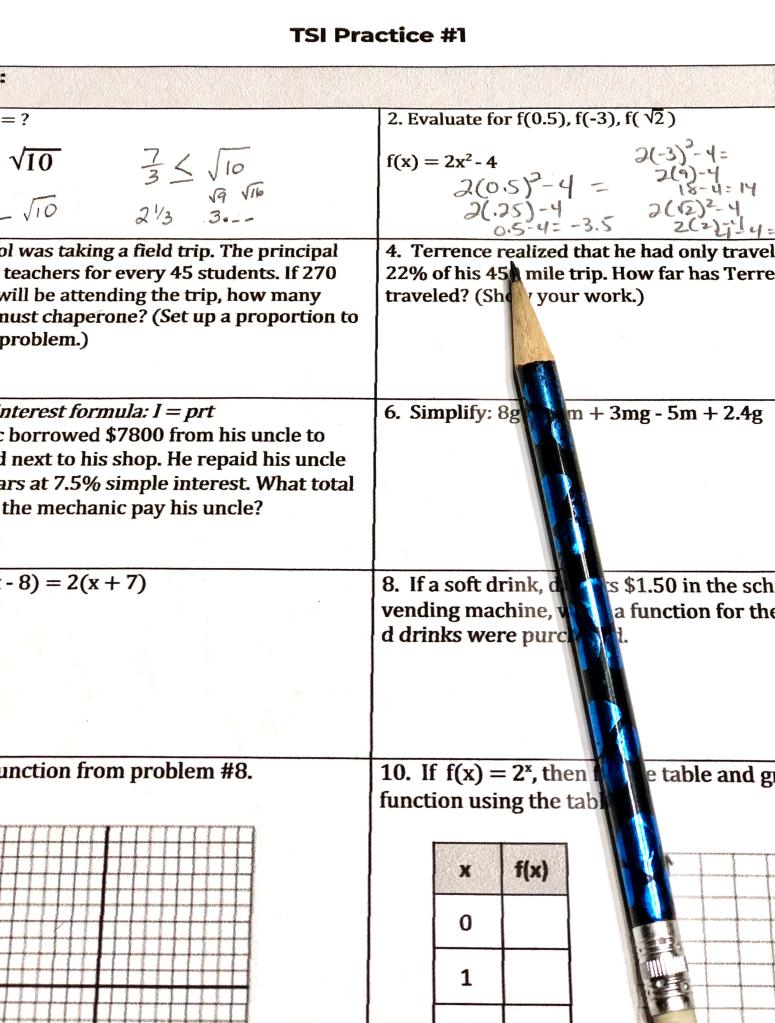
Here’s a pic of one of the sheets:
If you are not a Texas teacher and just need some good overall reviews for your ACCUPLACER class or your junior or senior math classes, these practice sheets would come in handy!
Go check this resource out or if you are interested in getting all the TSI materials, then check out the bundle!
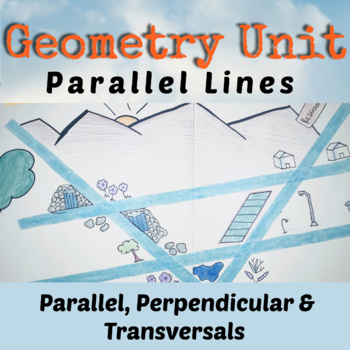
Why are parallel lines, perpendicular lines and transversals so important in Geometry? Have you thought about it? Why is this taught early in the geometry curriculum? Geometry is the study of shapes. How are shapes made? Yep, with lines or line segments to be more exact.
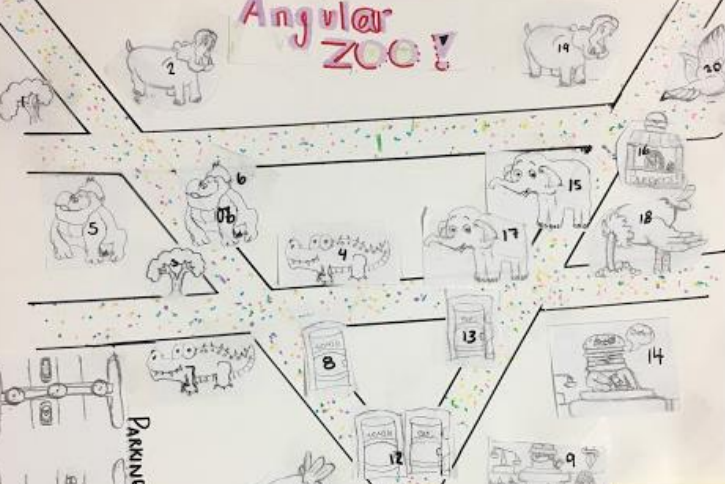
The whole time I’m teaching students about parallel lines and transversals, I’m constantly saying that this idea will return when we are dealing with future topics. One of my activities in fact, puts the converse of the postulates and theorems learned during this time into perspective. I ask the students to draw over the segments that make up the shapes to notice how parallel lines and transversals are involved. See below:
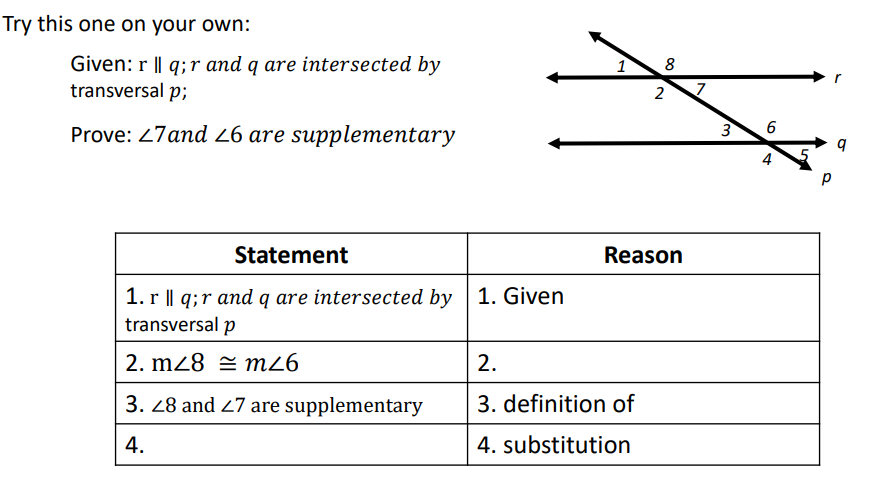
The resource with the above worksheet has a ton of hands-on activities. Students measure angles and discover which types of angles are congruent and which types of angles are supplementary. Parallel Lines and Transversals {with Project} is the name of this activity. It has a ton of engaging worksheets, notes, proofs and comes with a project and a short quiz.
Before I give my quiz over this lesson, I have the students do a Boom Card review. If you know me, then you know I love Boom Learning. This activity has 20 problems and students can redo them as many times as you will allow. It’s a great way to reinforce learning.
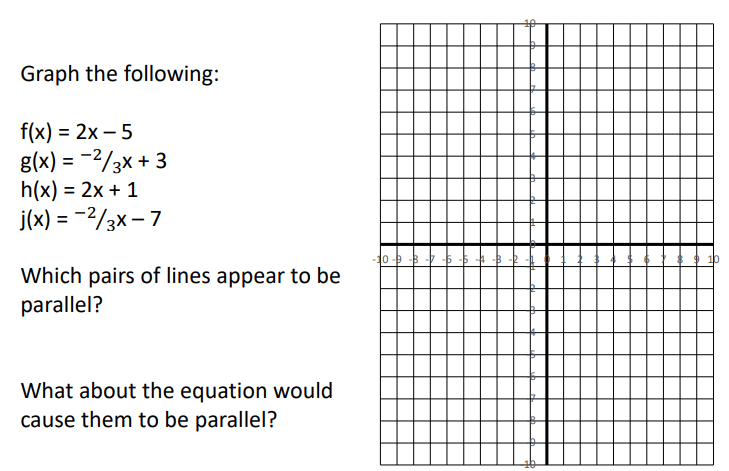
After the project, I specifically focusing on parallel and perpendicular lines. I love this lesson and the one over parallel lines and transversals so much because it gives me insight into the algebra skills of my students. After the transversal lesson, I have a good idea of who struggles solving equations. After the parallel and perpendicular lesson, I have a good idea on who struggles with the following major algebra concepts:
graphing
solving for y and understanding slope-intercept form
slope
using the slope formula,
plugging into point slope-form
It’s nice to help students with their algebra skills, but as far as geometry goes, why do they need to know when lines are parallel and perpendicular? The answer is the same as previous…shapes. This time we are learning about lines on a coordinate grid. If we notice lines are parallel or perpendicular, then in future lessons, we will know if a shape is a parallelogram, rectangle, square or even a right triangle. This Parallel Lines and Perpendicular Lines lesson could be used in an algebra class or a geometry class but I love how these two contents come together in this lesson!
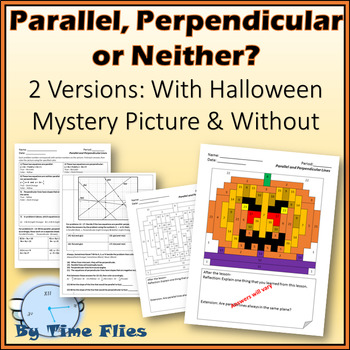
I have a set of Boom Cards for this lesson too that I call: Parallel, Perpendicular or Neither?
This activity usually falls around Halloween for me, so I’ve also created a Halloween activity that is super fun. It comes without the Halloween theme if you prefer. It’s a nice way to reinforce this learning!
This unit is so important because it plants the foundation for many future topics. I think that it is so important that we as teachers understand where topics are headed. Sometimes, it is not related to anything else in our subject, but it needs to be taught for future years. If you have only taught Algebra or Geometry, I highly suggest that you reach out to your principal and ask to teach Algebra 2 and Pre-Cal and even Calculus if you get a chance. It is eye-opening! Algebra and Geometry are so important in these other subjects. I learn new things and how they are applied all the time. I see things that I teach my students right now and how useful they are in my son’s college engineering classes. It’s exciting to see how important our teaching really is.
If you are interested in all of these resources in one bundle, click on the picture below. Thank you for all you do and have a great school year!
I’ve been fascinated by inequalities lately. I always find it interesting how students tend to get them backwards. I feel like they learn some bad habits and have some misconceptions about inequalities before they get to Algebra. It’s hard to get them out of those habits.
I’ve heard my students say that you always shade in the direction that the inequality is pointing. Because of this situation, I try to get them used to switching the inequality if the x is on the right side of it. This really is not an easy concept for them and I think it’s because they really do not understand what’s happening.
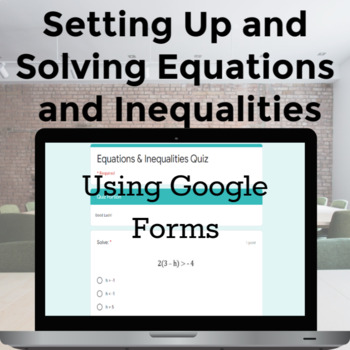
What is this sign? What does it really mean? Why do I switch it sometimes and not at other times? These questions are hard. I developed a lesson where the students do a discovery of what causes the inequality to switch directions. As they are solving problems in the Google Sheets activity a picture is evolving. The kids can’t wait to finish to see what the picture becomes.
The rest of the activity is setting up, solving and graphing inequalities. To see if students truly do understand, I ask them to either show work or explain their steps. This is really challenging for many students. It’s interesting to see if they truly know what they are doing.
I have several activities that go nicely with this one. Check out the resources below:
You know, it’s always a blast to incorporate a holiday theme into math activities. It adds a touch of excitement and makes learning even more enjoyable. That’s why I’ve gathered all of my holiday math resources in one place. And the best part? I’ll keep adding more as I create them.
Whether you’re gearing up for Thanksgiving, Christmas, Valentines or any other season, you’ll find a variety of math resources that your students will love. Each of these activities is designed to make learning math not just educational but also fun.
If you’re curious about a specific activity, simply click on it. This will take you to my Teachers Pay Teachers store, where you can read a detailed description of the resource. It’s a convenient way to find exactly what you need for your classroom.
The holidays are a wonderful time for creative and engaging teaching. So, go ahead, explore these holiday-themed math resources, and bring the joy of the season into your classroom.
Dealing with expressions is the foundation of Algebra. The tricky part is the basic math that is involved. As a high school teacher, I love using expressions to have students practice their basic skills such as operations with positives and negatives and dealing with decimals and fractions. It doesn’t make sense to me to give my students practice problems that look like this: -5 + 8. I need them to know how to do that problem, but why not make it look like this: -5x + 8x. I also want students to use these expressions in a situation like a perimeter problem or an area problem. All of these things help prepare students for tougher problems and it gets them used to setting up problems themselves. I try to use a variety of resources through the first part of the year in Algebra. My daughter and I have both created expressions activities that can be useful for any math teacher that teaches expressions. Have a look below at two of our favorites:
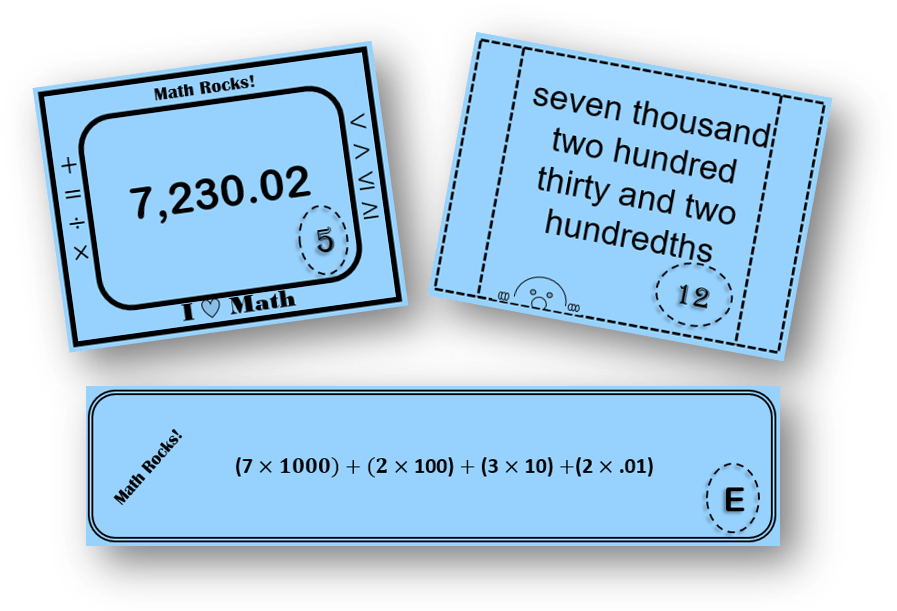
My daughter recently upgraded one of her resources for distance learning. This resource originally had a set of 24 matching cards where the students match a number to the expanded form and to the word form. This is a great activity to see if students understand expanding numbers with decimals and then to see if they know the place values. The resource is called Matching Different Forms of Numbers.
Now she has made this ready for distance learning. She has transformed it into a Google Slides where students will drag and drop to match the various forms.
I love the last question on the Google Slides which is to create the three forms on your own. We love when students have to create. After working 8 different problems, they will be able to follow the examples and create one on their own. I love that.
The matching cards were originally in her Objective 2 5th Grade Math resource. Now the matching cards are separate and can be purchased independently.
Matching cards are fun and use lots of brain power. If you teach elementary math, go check this activity out to see if it is something you would like to add to your curriculum.
***Please read further, but I recently found out that students that took Algebra and passed in the 2019-2020 school year are exempt from ever taking the STAAR test. When I wrote this, I did not know that. Here it is on the TEA website:
In waiving the required performance on academic assessments under TEC, §28.025(c) and §39.025(a) for spring 2020, the following applies: If a student is on schedule to complete instruction in the entire curriculum in spring 2020 for a course that has a corresponding STAAR EOC assessment, the student is not required to pass that specific test to fulfill graduation requirements. If a student is on schedule to complete graduation requirements in spring 2020 but does not have the opportunity to retake a STAAR EOC assessment prior to graduation, the student is not required to pass that specific test to fulfill graduation requirements but will need to complete the IGC process. For students graduating in future years but taking one of the five courses with a corresponding STAAR EOC assessment this year, those students will not be responsible for meeting that EOC assessment graduation requirement if they earn course credit this year.
This changes my thinking, but I am going to incorporate as much of the Algebra that I’ve listed below through bell ringers in Geometry since they are going to be weak. This will help them in their future math classes! At least now, I don’t have to do it all in one semester. I can spread it out over the year.
Here is this original post:
About 4 years ago, I created an Algebra STAAR Review that covered the newly established Algebra TEKS. Each of the Algebra TEKS is covered on a page of its own. At the top of each page, I put the objective practiced on that page. My thinking was if a teacher wanted to individualize the work, or just cover a certain standard in class, then this would make it easy for them.
Most people love the review, but some people complained that it was too much material. It is too much to try to cover in 2 or 3 weeks before the test. It is a detailed review with a short quiz at the end of each section. Each objective would probably take two to three (or more in some cases) 50 minute class periods to get it done. My mistake was that I did not give the teachers that purchased this review a suggested plan of action. With the craziness of school last year, I feel like it’s time to help teachers with a plan of action for the STAAR test. I have many questions from my district and the state that cannot be answered until we get closer to the school year, but I still want to forge ahead with a plan and I’d like to share it with you.
I am constantly studying the Algebra STAAR Exams. Recently, I took the tests from the last 3 years and put together an analysis. I wanted to see any patterns or trends. TEA has said how many questions come from each category, but when you figure out the details yourself, it’s eye opening. I’m going to teach all of the TEKS, but this helps me know which ones that I really need to emphasize. I took each objective and broke it into each standard within the objective and made tables and graphs for each objective. Below is the one I made for all of the objectives. The columns represent the number of questions in that category for that year.
*You can get a copy of the whole analysis at the end of this blogpost.
Before I share my plan, I wanted to discuss more about how to use the resources. For instance, Objective 2 has nine standards. There is no way to do all nine standards plus the quiz at the end right before the test if you want to review other topics. A suggestion is to use parts of the review during the school year to spiral the information. Pull them out when you need to review for a test or use them as bell ringers. Teachers have no time and before they know it the test is right around the corner. The best time to plan is as early as possible. My review bundle can be used throughout the year AND at the end of the year, so get the review now, print it off, put it in a binder and start thinking about how you can use the material. Also, if you purchase this and see something that needs to be added, just give me a shout out and I’ll see what I can do. (That’s the best part about purchasing from Teachers Pay Teachers. We can revise and edit as needed!) One thing that I really love about creating resources and lesson planning is being able to help other teachers that do not have the time to do it themselves, so here’s my Algebra STAAR TESTING PLAN for 2020-2021. I’m using the dates set by Texas as of July 2020. If things change, then I’ll adjust. I will be teaching both Algebra 1 and Geometry next year. Both groups will be taking the Algebra STAAR at some point since the STAAR testing was cancelled last school year.
EOC BEll Ringers – 10 Weeks, 120 Problems
All of the plans below are based on my Algebra STAAR Bundle and the EOC Bell Ringers-(I’ve changed the title to “Algebra Bell Ringer Review” but it is the same as previous.) The one thing not incorporated into my plan as of now are the quizzes at the end of the objectives. These could be used as pretests, posttests, homework, tutorials etc. I’m sure times will arise that I’m not thinking of right now, where I can use them.
TEST PLAN – December Test
(Testing Window – December 8 – 18, 2020)
Who is the Test For? Students that did not pass the Algebra STAAR in previous years and geometry or other math students that did not pass the Algebra STAAR or never took it because of COVID-19.
**Note to Geometry Teachers – Let’s face it, Geometry will not be the same. You will need to focus on Algebra when you can. Some Geometry topics will not get as much attention this year!!! Some good news is that we do cover Algebra naturally in Geometry. While we are working on Parallel and Perpendicular lines, we can cover these Algebra Standards: 2B, 2E, 2F, 2G. When we are working with segments, segment addition, angles and angle addition, we can cover the solving equations standard: 5A.
Start the 2nd Week of Schooland do:
10 Weeks of Algebra EOC Bell Ringers. (Get a FREEBIE sample of the Bell Ringers at the end of this blogpost.)
Pick days before Thanksgivingto work specifically on these topics: (***Side Note – My Algebra EOC Review covers all the TEKS and at the top of each page the objective is written, so you can easily pull the TEKS you need!)
Linear Topics – Writing and Graphing Equations Slope and Key Features of Graphs (2C, 3A, 3B, 3C)
Writing, Graphing and Solving Linear Inequalities (2H, 3D, 5B)
Use these objectives as Bell Ringers OR add them to your homework/classwork starting the 2nd Semester. Each of these objectives is covered on a page in the bundle for that objective:
1st Week: 2B, 2D
2nd Week: 2E, 2F, 2G, 2H
3rd Week: 3A, 3H
4th Week: 4A, 4B, 4C
5th Week: 12A, 12B, 12E
6th Week: 9A, 9B, 9E,
7th Week: 10A, 10B, 10C
8th Week: 10D, 10E, 10F
9th Week: 6A, 6B, 6C
10th Week: 8A, 8B, 11B
11th Week: 12C, 12D
End of March: (March 22, 2021)
The 3 Quizzes and Task Cards – (This is part of the bundle!) This takes a while to complete. I usually start the Task Cards at the end of March. Last year, I used the Task Cards as flash cards and put them in rings for each student.
2 Weeks Before the Test:
First Week:
3B, 3C, 3D, 3E
2nd Week
5C, 9C, 9D, 11B
1/2 Day of Camp :
Use the worksheets and the task cards to do: 2A, 2C, 2I
Use the matching cards to practice: 3F, 3G, 3H
Use the task cards to do: 5A, 5B
Use the worksheets to do: 7A, 7B, 7C
For Students that did not pass in previous years or in December:
Invite to 1/2 Day Camp
Individualized Packets – Use their test results to create individualized packets.
High School teachers and their students should be aware of the ins and outs of both the SAT and ACT exams. Both of these exams are used by colleges and universities to make admission decisions. My goal as a high school math teacher is to be aware of the testing dates and keep my students practicing the skills needed to be successful on either or both of these tests. Here are the testing dates for both exams during the 2026 – 2027 testing season:
Month
SAT
ACT
August 2026
August 22
___
September 2026
September 12
September 19
October 2026
October 3
October 17
November 2026
November 7
___
December 2026
December 5
December 12
February 2027
___
February 27
March 2027
March 6
___
April 2027
___
April 10
May 2027
May 1
___
June 2027
June 5
June 12
July 2027
___
July 10
In-School Testing SAT and ACT in-school testing dates vary by participating school or district. Check with your school counselor for the test dates and options available at your school.
When a student asks me which one they should take, I always say both. Some students do much better on one of them than the other. The students should also think about which colleges they are applying to and look at the requirements to help them decide which test to take. More urban high schools are paying for students to take the tests during the school day. This is an awesome opportunity and the students should take advantage. Another thing for teachers to keep in mind is that 11th grade students have an opportunity for recognition and scholarships through the National Merit Scholarship if they do well on the PSAT in October.
If you’re wondering how the SAT and ACT math portions compare, take a look at my chart below:
SAT (2024+) Digital SAT
ACT (2025+) Enhanced ACT
1 Math Section with 2 Modules • 35 min per module (70 min total) • 44 questions total • Module 2 adjusts based on Module 1 performance Calculator allowed on all questions.
1 Math Section • 50 minutes • 45 questions Calculator allowed on entire section.
100% multiple choice 4 answer choices per question
1) Algebra (~30–35%) • Linear equations in one or two variables • Linear functions • Systems of linear equations • Linear inequalities 2) Problem Solving & Data Analysis (~30–35%) • Ratios, rates, units, percentages • One- and two-variable data • Probability, statistics, and evaluating claims 3) Advanced Math (~11–16%) • Equivalent expressions • Nonlinear equations and functions • Systems of nonlinear equations 4) Geometry & Trigonometry (~11–16%) • Area and volume • Angles and triangles • Right triangle trig • Circles
1. Preparing for Higher Math (57–60%) Includes: • Number & Quantity – Real & complex numbers, exponents, vectors, matrices • Algebra – Linear, polynomial, radical, and exponential equations; systems of equations • Functions – Graphs, notation, piecewise, logarithmic, transformations • Geometry – Congruence, similarity, trig, volume, circles • Statistics & Probability – Data displays, center/spread, probability 2. Integrating Essential Skills (40–43%) Multi-step and applied problems using: • Percentages, rates, proportional relationships • Area, volume, surface area • Averages and medians • Converting between forms • Applying skills in real-world situations 3. Modeling(cross-category) Appears throughout the test: • Build or interpret equations • Use graphs/tables/functions • Critique or revise models
Comparing the SAT and ACT Math Portions
Now that you know more about these two exams, it’s time to start thinking about how to prepare your students. Even 9th and 10th graders can take the SAT 8/9 and the SAT 10 if your school chooses to facilitate it. All levels of students need practice over these exams. These tests are not like what students are accustomed to. One of the best ways for a teacher to understand how questions are asked is to take some practice tests. Very quickly you’ll see how you need to up your game in your classes and ask questions in different ways.
In 2016, I became a teacher on an Early College High School Campus. This is when my interest in college readiness soared. I also felt bad that in my previous years I did not give much thought about these tests. During that first year on the ECHC campus, I was given a class of seniors that had never passed the TSI (comparable to the ACCUPLACER). I had no resources, so I started researching and soon found out that I was going to need to create my own. Once I got most of my students to pass the TSI, I began preparing them for the ACT and SAT. Again, I had to create my own lessons. I’m happy to say that I’ve got all of these resources in my Teachers Pay Teachers store. I’ve got them in various forms. You can purchase bundles or individual lessons. I’m still enjoying creating these resources and I’m adding things as I go.
I’m glad you made it here. This shows that you are invested in your students. They rely on us to use our knowledge to advance their knowledge! I wish you and your students success and a happy future. Please check out my resources if you are limited on what you have available!
Sometimes you’ve just got to get started and quit worrying about the perfect way to do something! As teachers, we tend to overthink. We want everything to be perfect. In teaching, there is no perfect. Just dive in and GO!
There is no better place to start in geometry than with the three undefined terms: point, line and plane! First, I like to see what students remember from past geometry lessons so I’ll ask them to list as many things as they can think of from their past math classes that had to do with geometry. I am amazed at how many students just sit and stare when I ask them to create that list. Sometimes I’ll have to prompt them by saying, “Do you know any shapes?” If they say yes, then I say, “Then you know some geometry.” I’ll ask again, “Do you know what a right angle is?” They usually say yes, so this is a nice way to get the ball rolling.
Now that the students realize they have an idea of some geometric concepts, I begin my lesson. We talk about how hard it is to define a point without giving an example. I go on to talk about line and plane and we discuss how in real life, there are no lines that go forever on this earth so we have to use examples that come close.
Next, I bring up some other important objects to see if students know what they are, such as segments, rays and angles. Students usually remember these from the past, but they are not familiar with how to name them using symbols. We discuss how to use a combination of letters and symbols to name things and how sometimes, you can use multiple ways to name the same object. Students struggle with writing names of geometric objects the correct way, but they get better as the year progresses.
When I talk about angles, I like to bring out the patty paper. This really gets the definition of an angle across. I like to have students draw two different rays on separate pieces of patty paper. They call one Ray CA and the other Ray CB. We then work on creating different types of angles and then they tape it into their notebook. Regular paper would work for this as well. You can see through regular paper well enough to do this exercise.
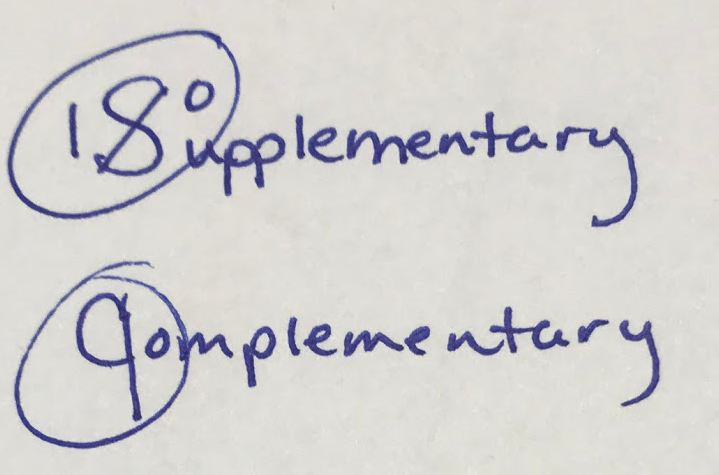
Another geometric concept that students usually know before entering my class is supplementary and complementary angles. If they struggle on knowing the difference, I use this little trick seen on the left. After I show the students this visual, they never forget the difference!
I finally finish up the lecture part of the lesson by discussing adjacent angles, vertical angles and linear pairs. We also need to spend time on collinear points, noncollinear points, coplanar points and noncoplanar points. This lesson is packed full of vocabulary so students need to start an interactive notebook to keep all of this information. ***Play-Doh is a great visual when explaining some of the vocabulary!Imagine three Play-Doh balls place in a line with a pencil or a straw place on top of them. This would show collinear points!
We do some practice worksheets to make sure they are starting to understand. The next time we meet, we will work on the postulates that use these basic terms and try to use as many real-life objects as we can when discussing them. Here’s an example of my Google Slides presentation of one of the postulates:
I like to give a quiz over this lesson after students have completed the work. I give them a warning that the quiz will happen the next class. To make sure they do well on the quiz, we grade each other’s classwork and homework and make corrections and then give it back to the owner. ***In a virtual lesson, have students grade their own. Call on individuals to give their answers. I usually just give a completion grade over this because it’s not usually a pretty grade 🙂
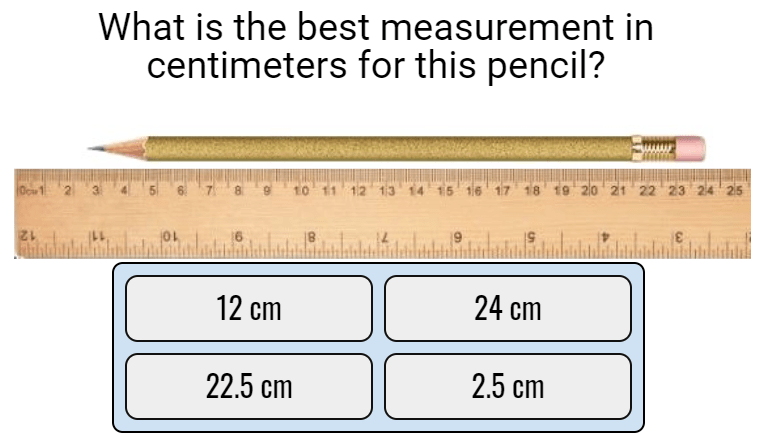
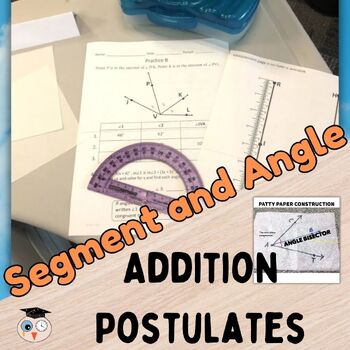
The second big lesson of the year that I cover is segment addition and angle addition. This lesson has everything: measurement, setting up equations, solving equations and more postulates. It’s also great for continuing to discuss the correct way to name segments and angles. I love having students measure things because even in high school, they struggle on this. I find that they have misconceptions on how to measure inches. Students will try to measure something that is 1.125 inches as 1.1 because they are confused on the precision and do not understand that inches are not broken into tenths like centimeters are. (WHEW! Yes, sadly this is true.)
I’m ready to do this lesson virtually or in a live classroom this year by having rulers and protractors ready to go on my digital lessons. I’m anticipating some fun with this and I do expect some questions about accuracy. I know some students will round to whole numbers which is not what I want.
I love love love the equations involved in segment and angle addition. Students get practice on setting up equations correctly and then solving and plugging back in to find the segment or angle. It’s so important to use Algebra in Geometry as much as possible. ***Side note: If you are from Texas, your Geometry students will likely be preparing for the Algebra STAAR that they missed last year, so be sure to cover equations every chance you get.
I made a video preview of the digital version of this lesson if you’d like to take a look:
Before I give a quiz over the segment addition and angle addition material, I want to review all the things that we’ve done so far. I’ll give my students the Boom Cards that cover the first and second lessons. If you have not used Boom Cards, you need to start! I love Boom Cards. You can join for super cheap and there is even a free version, but you’ll want to upgrade after to you use it!
After all this practice, the students are ready for the next quiz. I like to give a lot of quizzes in Geometry because there are so many details and this is a great way to see how students are doing.
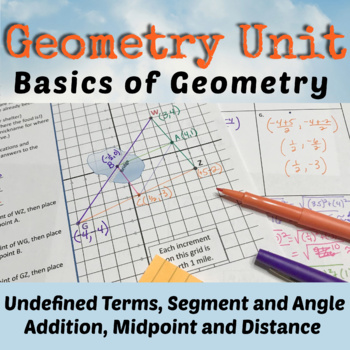
The last lesson in my first unit of Geometry covers distance and midpoint. This activity requires the student to be active! Students will discover both methods and see that they would probably figure out how to find these lengths and points or locations on their own using logic. Students should have learned Pythagorean Theorem in the past and I like to show the students how the distance formula was derived from the Pythagorean Theorem.
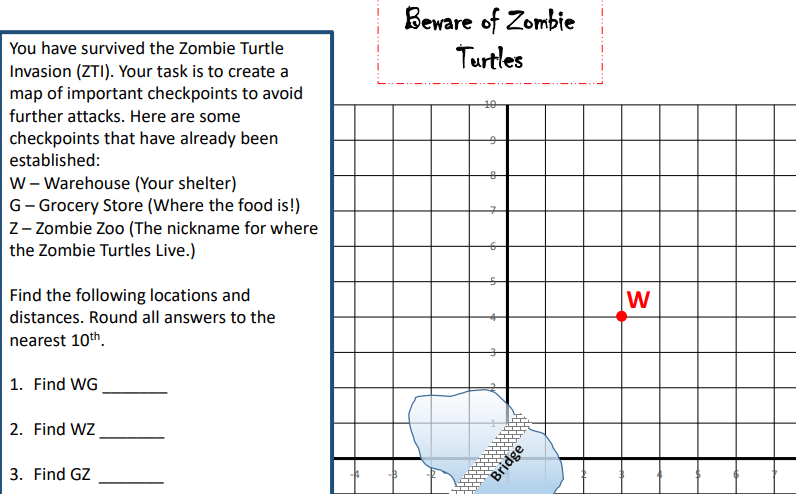
The last part of this activity is a silly made up story that I call the Zombie Turtle Problem. (Have you ever heard the Tom Petty song, Zombie Zoo? This song inspired me to do this problem. The song is silly but I love it.) I’ve placed some items on a map and the students have to find different distances and midpoints and then I tie in perimeter. Here’s a snippet of the problem:
I’ve recently made all three of these resources ready for a virtual learning situation. Teachers Pay Teachers has made this possible for all resources that were originally downloaded as a PDF. I’m excited that no matter what situation I go back to in the fall, I’ll have these up and ready to use whether I’m in a live classroom or I’m delivering my lessons via a digital platform.
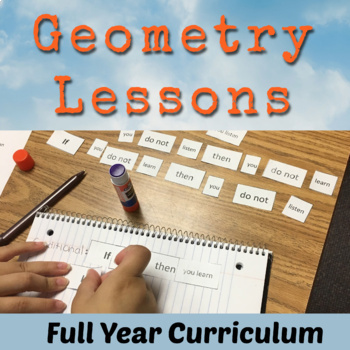
All of these lessons are in Unit 1, but they come individually as well! Check out the links below. Good luck and I hope you’re excited for your first lessons in Geometry!
All 4 Resources in One!
1st Lesson in Geometry
2nd Lesson in Geometry
Review for the Quiz over 1st Two Lessons!
3rd Lesson in the Unit
All the Geometry Units!
What else do you like to do in your first unit that you don’t see here? Feel free to leave me a comment below!
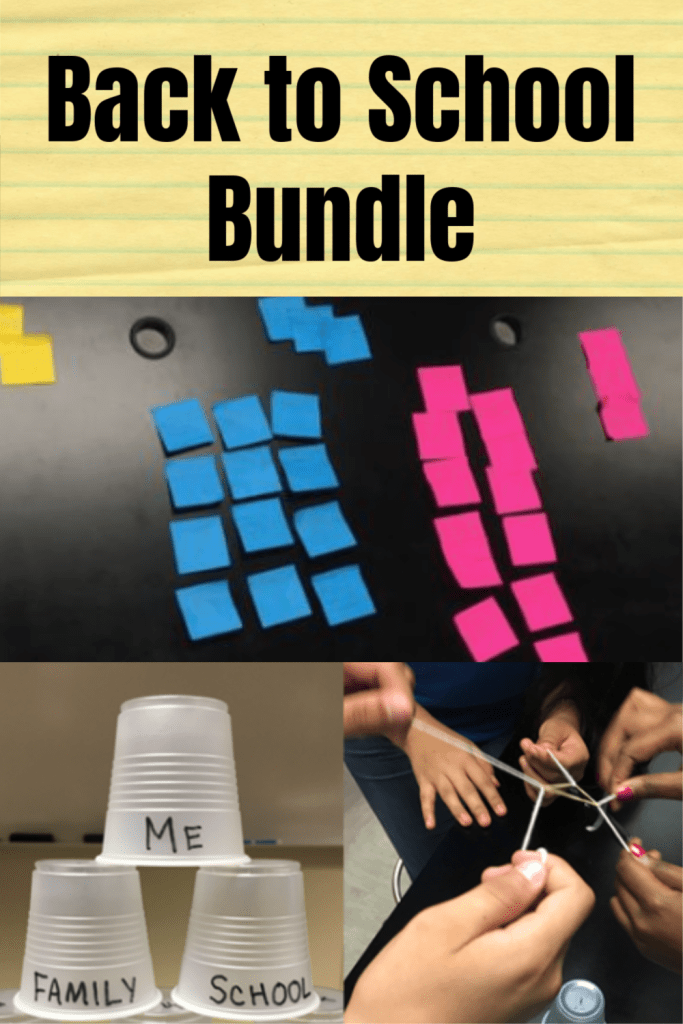
My husband and I use certain activities at the beginning of the school year. He teaches biology and I teach math, but we often collaborate and come up with ideas that we both will use. We decided to put these together into a bundle and list them in his store. Here’s a brief overview and a timeframe for when to use them:
First Day – Get to Know You Activity
This activity is a way to get the students up and moving and meeting each other. The activity comes with 30 pairs of puzzle pieces that are used to get the students to find their match. Once they have a partner, then they start the discussion questions that are written on the board. This activity is fun and the puzzle pieces can be used in the future when you need a way to randomly pair up students.
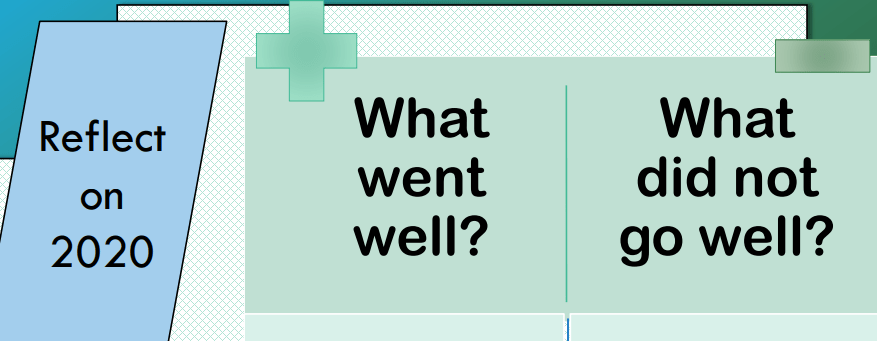
Having students set goals is important. This activity gets the students to reflect on the previous year and think about what they’d like to accomplish for the upcoming year. This activity comes in a PDF format as well as a Google Slides format.
2nd or 3rd Week of School – Class Goal Setting Activity
We started using this activity a long time ago. Get students to write class goals and then sign them. We’ve got this activity broken down, so you can work on it a little bit each day until it is done. When finished, you have a poster for students to sign. Great classroom decoration that is a good reminder of what the purpose of being in your class is and your administrators will love it.
Before Starting Group Work – Team Building Activity
Teamwork is important and students need to feel comfortable working together. That’s what this activity is all about. Get your groups together and teach them how to communicate. This activity won’t allow anyone to hold back.
Whether you are a veteran teacher or you are starting your first year, you probably are thinking that you need to start either doing some or all of these activities. Like I said, we’ve put them in a bundle, but if you would like to only purchase a specific resource, then you can do that as well. The main thing, is to start thinking about your first few weeks. These weeks are important because they set the tone for your class. A great start to the year will help you have a successful teaching experience as well as help your students. Dive in and start thinking about what you want to do!