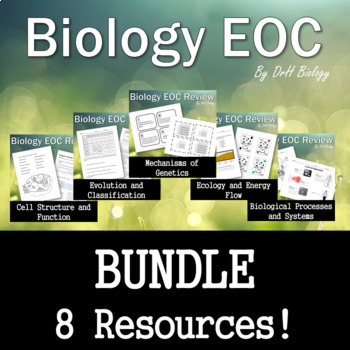
My husband and I teach state-tested subjects in Texas and we have both created reviews. The following blogpost is from my husband who is a Biology teacher:
How do you get ready for your state exams? This is not an easy task and do you really want to create all your own material? I asked myself this same question a few years ago. The thing is, I was the only Biology teacher on my campus, so I did not have much of a choice. I knew that I didn’t want to create a massive resource that I couldn’t use, so I decide to break it into the 5 Reporting Categories that the state of Texas uses to organize the material. This seemed much more manageable than thinking about individual TEKS. I looked at the released tests and noticed many questions that kept reappearing and what the readiness standards were. Even when the TEKS slightly changed a few years ago, there were no major changes needed in my review. I’m proud to say, that I’ve used my reviews going on 5 years now and other than a few minor tweaks here and there, it is still a great review and relevant now more than ever. Please take the time to look at each category and see if any of this is something that you can use. All 5 categories are sold in a bundle, but each individual category is sold on it’s own as well. If you are struggling to know what to use to help you students, I think you will find this material very helpful. My advice is that you reflect on your data and decide where you need to spend most of your time and start planning now. Do you like to spiral information throughout the year? Do you need to do whole class reviews or individual reviews through tutorials? Are you planning a camp? Get a picture of where you should put your efforts, then it’s time to decide the resources you will want to use.
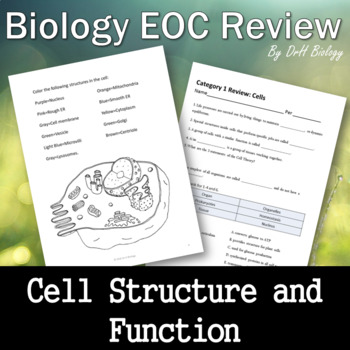
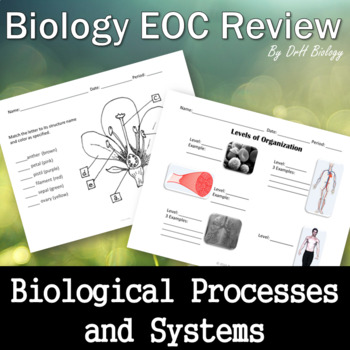
Category 1: This is a Biology review for Category 1: Cell Structure and Function. It is aligned with standards for the Texas EOC, but can be used for any science class as a review for cells and cell processes. The critical thinking worksheet supports critical thinking with 2 versions- one with a word bank, one without. This is a good collaborative piece, partner work or individual assessment. Students enjoy coloring so, why not learn about organelles while doing it? While using manipulatives, students can demonstrate knowledge of similarities/differences of the two cell types (pro- and eukaryotes) by categorizing cell characteristics using cards.
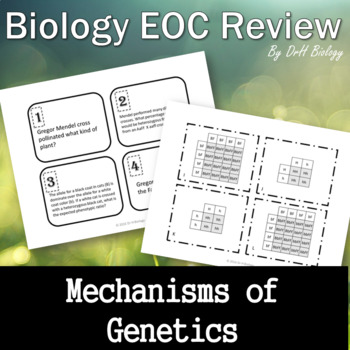
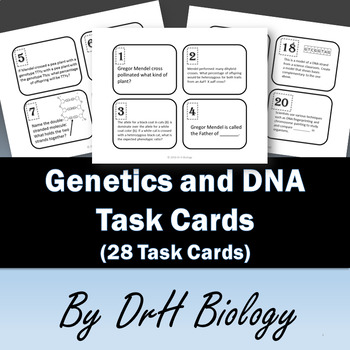
Category 2: Students typically struggle with genetic inheritance and anything DNA. This package focuses on essential vocabulary and working Punnett squares. Help your students become proficient with the language of genetics and protein synthesis! Below is is one of the pages of task cards that is available in this review.
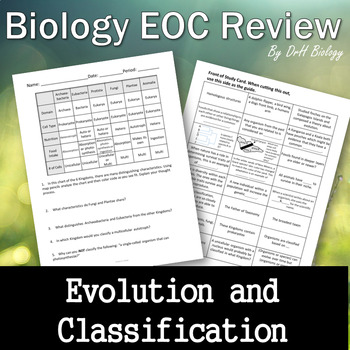
Category 3: This item will help students become familiar with the hierarchy of classification. Students critically think about how to color the Kingdom chart based on characteristics. Next, they classify themselves and for this activity, I have them choose one additional organism for each taxon that is shared with humans. Dear King Phillip Came Over For Good Soup!
Category 4: This set allows students to describe the interactions among systems focusing on regulation, nutrient absorption, reproduction and defense from injury/illness. Maintenance of homeostasis is featured as well as intensive investigation of the relationship between products and reactants of cellular respiration and photosynthesis.
Category 5: Ecology and energy flow review focuses on species interactions with each other and the ecosystem. The War Card Set will take on a life of its own. Most students know how to play war with cards but I noticed some groups would play an adaptation to Uno or they would make up their own game. Definitely make at least 4 sets and watch the creativity bloom!
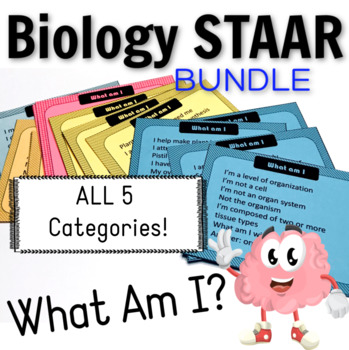
I’ve added a new resource this year that I am excited to use. This idea came to me from playing a game at my daughter’s house. This activity breaks the monotony of worksheets and is competitive. Again, I broke it down by categories and I sell it as a bundle as well as individual categories. Your students will play a guessing game called “What am I?” Each student will get a chance to read the card where other students are guessing what the mystery word is. There are a total of 64 cards in the bundle. Copy, cut and go! Below, you will see a sample card:
Good luck this year and every year with testing season. It is exhausting, but you will get through it! Please let us hear from you if you have any questions about any of the resources. If you have other biology classroom needs, my store is Dr.H Biology. Click Here TO FOLLOW MY STORE so that you can learn when I upload new resources.
Teachers know the importance of incorporating science, technology, engineering and math. In today’s world, students need a set of skills for future jobs that we can’t even imagine, so we must give them a variety of experiences. My husband and I have several activities that we believe qualify as STEM activities. Our thought process is that any time you can get students to do math in a real-life situation, you are headed in the right direction. Throw in some collaboration and problem solving and you’ve got yourself an even better experience. Remember, technology does not always have to be digital. Any use of a tool could be technology, such as using tape measures or any measuring device. Technology can be as simple as collecting data. The activities that we have below are excellent and will provide your students with some valuable thinking and exploration.
Vitruvian Man
Vitruvius asserted that every structure must be strong, useful and beautiful. This assertion was one of many in his writings. He also made claims about the proportions of the human body. Leonardo Da Vinci’s famous Vitruvian Man was an attempt to take what Vitruvius claimed and capture it in a geometric drawing. This measurement lab gives the students a chance to learn some history, collect data, through measurement, set up some mathematical problems, collaborate and analyze. The students go through 6 stations to find the measurements they need, then it’s time to test the ratios to see if they prove or disprove Vitruvius. You’ll love the accountable talk and the thinking that takes place in this very interactive lab.
The Quadratic STEM Activity
This is a self-paced project where students learn how to take information and plug it into an excel sheet then produce a graph of the data. I like to use it as a project grade that will replace the lowest test grade during my quadratic unit, but this does not have to be used in math classes only. This activity has a health aspect and can be used in science, health classes or even a medical class. Students create data tables for male and female blood pressures and then they are asked to take their own blood pressure to see if the data seems accurate. The school nurse will usually take blood pressure if you ask him/her or they can get it done at the machine at their local drug store. The final part of the activity is to write a short report on the findings. Below you will see part of a page that is explaining how to get started in the excel sheet:
My advice to the teacher before assigning this project is to go through the excel sheet yourself first, so that you can answer any questions from the students. As a math teacher, I love showing students how to use excel to create a table. This can come in handy any time they want to take a data table and create a graph. This skill could come in handy when writing future reports in any class such as science or social studies.
Nutrition Label Project
Dr. H developed this project because in the past the Texas Biology EOC would contain an analysis question using a nutrition label. This project is based on information found in nutrition labels but it has the students using many scientific processing skills. They must interpret and compare quantitative data using nutrition labels from cereals that they have chosen to analyze and investigate. Some parts of the assignment requires drawing inferences from the data and constructing comparative graphs to visually communicate information they have gathered. The final step of the project allows them to analyze and interpret the data into a written article explaining and defending their conclusions. As the students move through the assignments, you will notice the project becomes something they take ownership of and will have discussions with other students about their results. (HELLO CRITICAL THINKING!) They develop an understanding of that label on their food which they had never thought about before. Students will begin bringing you food labels and discussing ingredients or questioning if this food is good for them. The project is broken up into 4 parts that get increasingly complex and it builds confidence for many of your students. Dr. H says, “I assign this in the spring and, every year, I will get surprising work from a few students that kind of underachieved all year.”
Exponential Functions in Google Slides
This is a fun activity where students get to choose an exponential function situation and then work through the process of building a data table, graphing the situation, creating an equation and finally answering a question or two. The cool part is that your whole class is working in a google sheet all at the same time. I created this activity out of necessity one year when I was out of town. The students did the activity while I watched and helped them from my daughters house 2000 miles away. This activity is best for your Algebra 2 students. They need to have an understanding of exponential functions in order to be successful. An extension to this activity would be to allow your students to create their own exponential function activity. You would be amazed at what they can come up with!
I hope you are excited about these STEM activities. They are so much more fun and useful than the standard worksheet. It’s our job as teachers to answer the dreaded question, “When are we ever gonna use this in the real world?” I believe STEM activities are so important and will make you and your students feel satisfied about the work taking place in class.
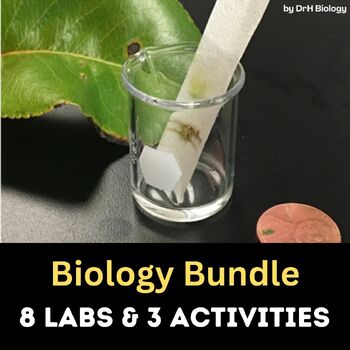
Creating resources is a family affair at my house. My husband is a biology teacher and has been creating his own resources for a while now. For the past 7 years, he has been the lone biology teacher at his campus, so out of necessity he has to create most of his curriculum. He has decided to bundle all of his labs, activities and assessments into one bundle. So far this supplemental bundle contains 47 resources! The best part about his resources is that he uses every single one of them, so they are classroom tested. One thing that is amazing about selling resources on Teachers Pay Teachers is the ability to improve and add to your resources and this is a constant practice that both my husband and I believe is important. My husband’s description of this bundle is below:
This bundle contains resources I’ve created out of necessity over the years. It has always been my goal to make things fun/interesting but still contain the necessary learning objectives. When I create a resource, I ask myself “If I were a student, would I want to do this?” I also enjoy watching my students doing the assignments. Actually, they have helped in the development of each resource by finding mistakes, letting me know if something is unclear or confusing and, just if they enjoyed doing it. There have been many times an English or Math teacher has come to me and said “When your kids come to my class they are still talking about what they did in Biology!” Me: Yesss!
The 47 resources in this bundle can be broken in 4 categories. Out beside each one, I’ve listed how many of those types of resources are in the bundle.
Labs (8)
Assessments (9)
Units (2)
Lesson/Activities (28)
Lab Spotlight
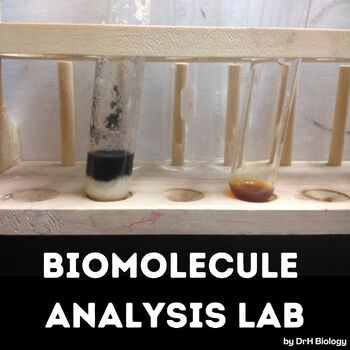
The biomolecules analysis lab probably has been through the most research and development in my classroom. It was given the name “Goop Lab” by students at some point. While it requires considerable prep and materials, the students get a real understanding of which foods contain which nutrients. It clears up misconceptions about food and creates a lot of discussion opportunities—especially when students compare their predictions to the actual results. If you are only interested in labs, I do have a lab bundle that contains my 8 lab resources or you can buy each individual lab in my store.
Assessments
These tests have all been written to follow the activities and labs included in this bundle. One of the most difficult concepts year after year is cell processes. Many students struggle learning things they cannot see. I’m thinking about the Cell Processes test over DNA, Mitosis and Protein Synthesis. I chose images for that test similar to what students will likely see on a state assessment. For a better understanding of cell processes, it is important they can tie the vocabulary to the image.
I’m not big on giving long tests or quizzes. Tests take up time and I like them to be concise and to the point. It is important to me to make sure they cover the objectives, but I never go overboard on giving long tests. Most of mine are 20 questions or less except for the semester exams. If you are only interested in a test bundle, see below (and all my tests are sold individually as well).
Units
I chose two topics to offer as an entire unit: Enzymes and Energy Transfer (cellular respiration + photosynthesis.) These objectives are heavily emphasized on state assessments and, of course, among the most difficult concepts for students to master. Again it is “cell processes” which is something a student cannot see but must understand. I have had good success in my urban-setting classes with each of these.
This unit contains presentations over photosynthesis and cellular respiration with presentation notes for the teacher. Students will be able to take notes from these presentations in their interactive notebooks. There are worksheets over both photosynthesis and cellular respiration. Matching cards are available for an extra activity to help clarify the information. This unit also contains a yeast lab and a 20-question assessment. Answer keys for all worksheets, matching cards and tests are included.
Activities/Lessons
Twenty-eight items is (conveniently) about the number of weeks you have in school that you are not interrupted by testing/field trips/other, etc… Kidding aside, these are all learning-objective-driven and have been developed over several years with much student input. Many of these are matching card activities that have been particularly successful. I keep matching cards out all year and I will routinely use them to fill the last 15-20 minutes of a class. The students will say “we’ve already done these!” Then I say “Okay, prove to me that you learned it!” Repetition is important to achieving mastery!
If you are a Texas teacher, the one thing not included in this supplemental bundle is all of my EOC review resources. These resources are very popular in my store. The most popular item is the bundle that contains reviews for all 5 categories plus has some bonus material. I’ve recently made a new item for reviewing the EOC’s that could be used in any biology classroom no matter where you teach. It came to me when I was playing a game with my family. I titled this activity, “What am I?” A student reads a clue while other students guess what the answer is. More clues are given until the students eventually get the answer. What a great way to review that’s fun and interactive.
Thanks for taking the time to check out all of this information. Teaching is a time consuming career. My hope is that I can save other teachers time and energy by providing them quality lessons and activities. I’d like to leave you with a freebie from my store as a thank you! Get your FREEBIE HERE: Genetics Practice Problem- Dihybrid Crosses
I’ve added a few more EOC resources since writing this post. You’ll see a Jeopardy-like Game and my Ultimate EOC Bundle which has several of the items mentioned above.
Quadrilaterals are a big topic in geometry. There are so many things to know that it tends to get confusing for students. Students have misconceptions from their middle school math classes that are hard to overcome such as that a square is a square and only a square. A square is no way, no how a RECTANGLE! OH My!
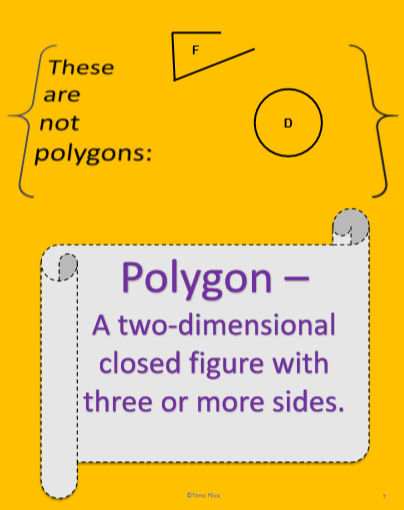
I created a quadrilateral unit where I begin with a card sort activity. The cards have different shapes on them and the students are asked to separate them into parallelograms, trapezoids and other major shapes. This year, I decided that they should have a “for sure” pile and also make a “not sure” pile. I love listening to the conversations. Below is a pic of some slides I show:
The next thing that I like to do is discuss the Venn Diagram for Quadrilaterals. For some students, this is a breeze but for others, they are totally confused on why I’m using ovals in a diagram to represent groups of quadrilaterals. It’s best to make sure your students remember what a Venn Diagram is. I like to give an example of a region with math students overlapping a region of biology students to show that the overlap means all students taking both math and biology. Look at the Venn Diagram below. Can you figure out what quadrilaterals go in each region? Can some go in more than one spot?
This unit is the best place to use always, sometimes and never questions and if the students understand the Venn Diagram, then the always, sometimes and never questions are pretty obvious. It’s also a good time to talk about what does opposite and consecutive mean? Many of the definitions and properties use this terminology, so I spend time helping them understand where opposite sides and angles are versus consecutive sides and angles.
I like to get the kite and trapezoid out of the way first, so I can spend most of my time on the parallelograms. Students are not familiar with the kite, so this is usually a brand new topic for them. They think they know what a kite is but usually they are getting a rhombus confused with a kite. Each time I present a new quadrilateral, I give the definition and then we try to find other things that are always true about the shape. This is cool, because you get to talk about the diagonals and how they create congruent triangles. I also try to put proofs into the lesson as much as possible.
During the trapezoid part of the lesson, there is a discussion on isosceles trapezoids, midsegments of triangles and medians of trapezoids. A good reminder at this time is how trapezoids are related to parallel lines cut by a transversal, so that they can understand that there are some same side interiors that will be supplementary. Again, there is so much information, that its hard to know when to stop. Trapezoids could be a two week lesson if you let it, but I keep it to two pages. After the trapezoid lesson and the kite lesson, I give the students some practice on finding various parts of the shapes.
The rest of this unit is spent on parallelograms. Each time that I get to a new shape, I call it a “Parallelogram Study” or “Rectangle Study” etc. I let the students work through the definitions, properties and proofs. The other aspect of this lesson is discussing the coverses of the definitions and properties. This helps the students realize that if you see a shape and you are not sure what it is, then what is the least information you need to decide it is a rectangle for example.
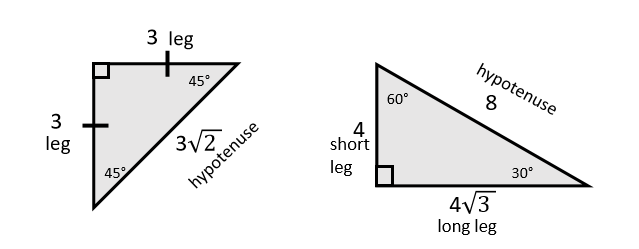
The lesson concludes with practice on the parallelograms. There is a page of work where some major algebra topics are practiced. For instance, there is a rectangle problem where the students have to set up and solve a system. There is a rhombus problem where the students have to solve a quadratic. There is a square where the students find the length of the diagonal using the variable “s” for a side. This problem is a lead up to 45-45-90 triangles. I usually have to help the students with this whole page, but I don’t mind. Since I’m an Algebra II teacher as well, I like my geometry students to see as much algebra as time allows.
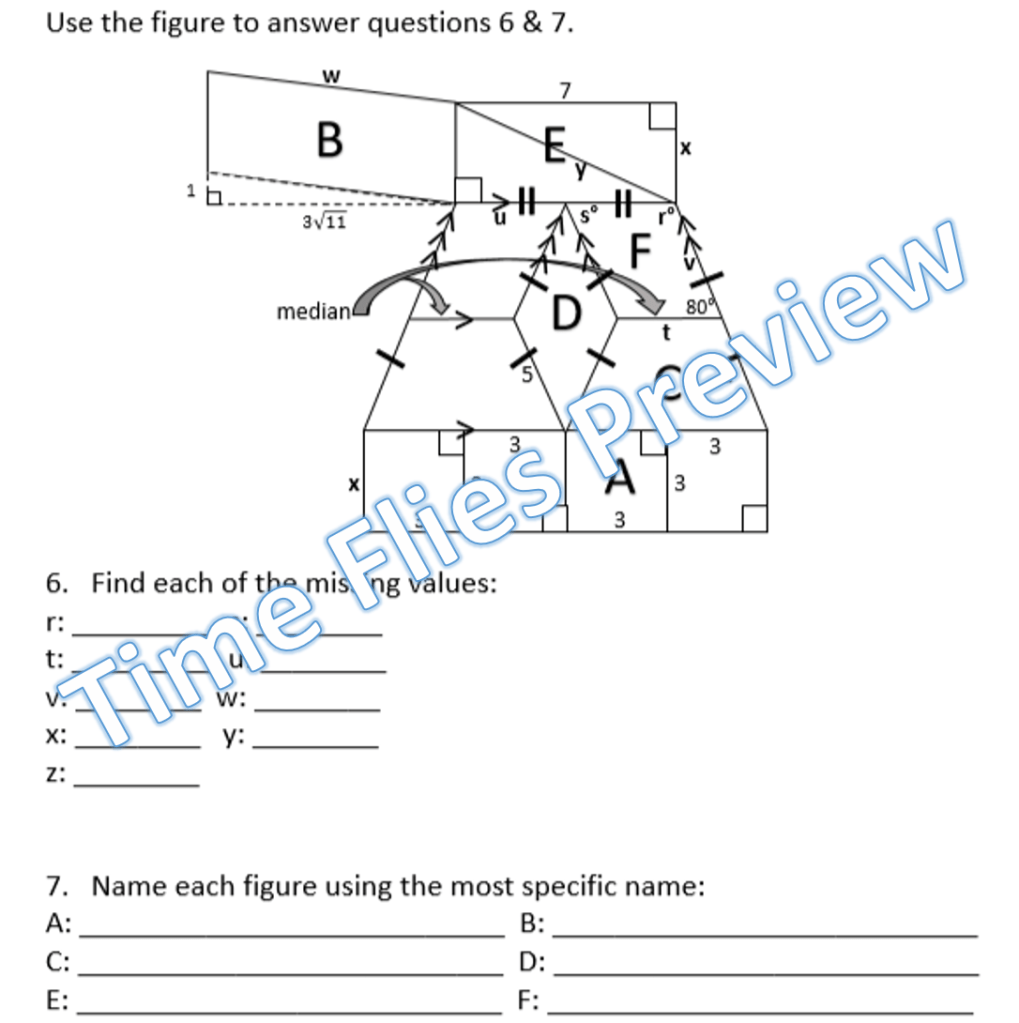
There is a set of task cards that act as a review for the Quadrilateral Test at the end of the unit. The test is only two pages long, but it is pretty involved. There is a major problem where the students have to find quite a few things. The picture of the problem is seen below:
Finally, there is another quick assessment that I use as a retest. All answer keys are included. It usually takes me about two weeks to get through all the work plus a couple of extra days to review and take the test. I love this unit. The information is extensive and I love how it hits on previous geometry and algebra topics. If you are interested, please check it out in my store. Click the pic below to go see the Quadrilateral Unit. If you would like to read more about my geometry curriculum, I have a blog post that you can read here: Geometry Curriculum for the Year.
I promised that I would keep anyone interested up-to-date this year on my progress. I love doing this because I’m going to be able to look back and see where I want to improve after I get my results this year. Here’s my post on the first six weeks: First Six Weeks in Algebra I
I lumped the 2nd and 3rd 6 weeks together in one post because I have so many interruptions during this time. Every time I turn around there’s a field trip, a district benchmark, PSAT, TSI or other disruptions. My strategy has been to get through as much content as possible. I know my students very well at this point and I know who to keep an eye on.
The content that we’ve covered heavily is seen below:
So far I haven’t pulled many questions of old STAAR test. Their minds were blown when I was explaining the recursive formula in arithmetic sequences. I did look back into old STAAR test to see how often sequences have been tested. The only question I could find from the the past three years was this problem from the 2017 released test:
In general, arithmetic (and geometric) sequences are not a big part of the test. The 2019 test did not have any questions on the topic. This question below is from the 2018 test:
I suspect that they rotate questions from the TEKS and that next year there will be at least one question like #22 or #9 above.
I wanted to start some recycling of the first six weeks through practice sheets like I did last year but life happens and I did not start this. (Side note: I’ve been teaching for 33 years. I always make plans to do this or that, but I’ve learned that I cannot always get to everything. Please don’t beat yourself up if you do this too. A lot of things in education and the school environment cannot be controlled. Don’t worry if you have visions of grandeur but it doesn’t always work out.) One thing I do feel good about is that I do not let the students use a calculator every day. They have to do math in their head. They did a lot of solving for y and manipulating formulas so they did get a taste of some of the things from the first six weeks which was mostly solving equations. Another thing I feel ok about is I know that I’m about to do systems which will also be good for practicing solving equations. We will also hit inequalities again through systems, so recycling information is going to happen naturally!
While on the topic of systems, if you are behind in your curriculum, this is a good time to try to catch up. Systems are important, but you can save solving for systems for after the STAAR test. Teach them how to set them up and solve them on the calculator for now. I hate this, but at the same time you have to make sure you cover all the material. Save solving systems algebraically for later if you need to.
I promised myself that I would make sure and have students explain the math they were using more. I wanted to know if they really understood how to solve for y and graph equations, so I made a flipgrid question when we got to solving and graphing inequalities. The students really enjoyed it and it was an eye opener for me. Students have a hard time with the vocabulary and I could tell who was bluffing their way through explaining the process.
The second semester has started and now it’s crunch time. I have to be deliberate in everything we do. We are starting with graphing and writing linear systems and then on to exponent rules. Check back to see what happens next!
It took me a year and a half to complete my geometry curriculum, but I finally did it. I’m constantly updating and adding to it. I guess you could call it a living and growing curriculum. I’m using the curriculum myself, so I find things I want to update or make better all the time. I also take suggestions from teachers that are using the curriculum. Recently, I had a request to make all the quizzes and tests editable. With the changing times, it’s important to have multiple tests that cover the same topic so that you can limit cheating, differentiate or give make-up tests or re-tests. All tests and quizzes in the curriculum are indeed EDITABLE now!
On the main page of my Geometry Curriculum on TpT, you will see every resource in the curriculum. I also sell each one of these resources separately in my store. A third way that I have the curriculum broken down is by units which I also sell in my store. Here is the first unit in the curriculum:
Why did I feel the need to write this curriculum? Many of my students come to me after taking Geometry over the summer. In my district, students have the opportunity to get ahead in math. If the student does not pass Geometry during the summer, they end up using the exact same curriculum again. They get to keep their book from the summer with all of the work already done. It doesn’t make sense. Also, it was very easy for students to find the answers on the internet for the book we used. It was time to figure out something and stay ahead of them.
I really like a hands-on curriculum. I use patty paper, compasses, protractors, tape and scissors on a regular basis. I also like to give Google Form tests as well as activities on Google Slides and Boom Cards. The resource cover above shows one of my favorite conditional statement activities. As you can see, we do lots of cutting and pasting.
Many of the activities are discovery lessons. I make sure there is plenty of algebra involved to keep these skills alive for the next math class. If you have any specific questions about this Geometry Curriculum, please leave a comment below, or ask a question in my TpT store.
To read more about the units, I’m slowly but surely writing posts about them so teachers have a better understanding of what they contain.
My final unit in the curriculum has been uploaded. It is a unit on probability which is part of the curriculum in Texas.
I’ve also recently made all of the tests and quizzes editable. If you purchase the curriculum, you will find them in each lesson. If you’d rather purchase this resources separately, click here: Editable Geometry Assessments.
You can find me on Instagram @time_flies_math . I like to show student work in action on my Instagram posts. Check it out if you have time. It will help you get a feel for some of the lessons. To see the curriculum in my TpT store, click the picture below.
As you were looking at the curriculum, you might have noticed that it contains Boom Cards. If you do not want Boom Cards, then click the pic below to get the version without them.
Several years ago, I wanted a fun Algebra worksheet that my students could do during December. I created the worksheet and we did it that year and then I changed schools and forgot about the worksheet. A friend of mine at the old school I was at sent me an email: Hey, can you send me that worksheet we did a couple of years ago that had the Christmas tree on it? I had to think for a minute…Where did I save that? I found it and made it even better and sent it to her. I was so glad I found it. As I was looking through the problems, I was thinking about how great this worksheet is right before the semester final. It’s got so much good stuff on it.
The topics covered are:
Knowing if a slope of a line is positive or negative.
Finding slope and y-intercept from equations and graphs.
Finding slope from two points.
Using different forms of equations: slope-intercept, point-slope, standard
Finding domain and range.
Graphing a line from an equation.
Writing an equation from a line on a graph.
Taking a problem situation and writing an equation, then graphing it.
I’m very pleased with all the material covered and I’m looking forward to this worksheet being a part of my semester final review. Here are a couple of pics from the front and back of the worksheet:
This worksheet comes with an answer key. Click the picture of the product below to go check it out in my store!
Factoring is one of those skills that students must know how to do since they will use it in every high school math class. This skill is one of the most important skills and unfortunately some students never really get it. I hear calculus teachers complain about how their students can’t factor. Students should already know how to factor before entering calculus but why don’t they? Factoring will be in all the college entrance exams too because students need to know how factor for their college math classes. I know in Texas that students can know very little about factoring and still pass the Algebra EOC. Questions on the EOC can be figured out by working backwards from the answer choices. There usually is one question each year where students have to find one of the factors which does make it a tougher question. Students really do not learn how to really factor until Algebra 2.
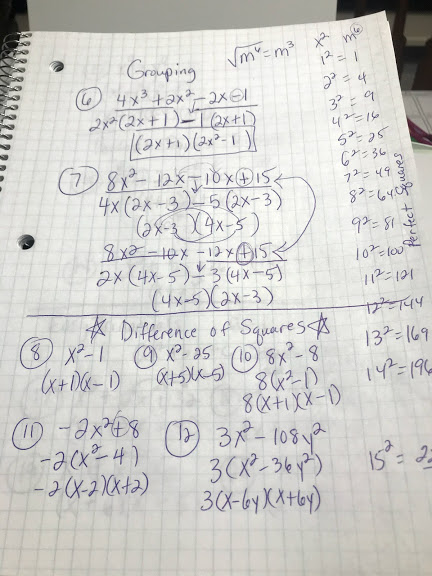
When I was in high school the method that was taught was guess and check. We got pretty good at it but back then you knew your multiplication facts very well. When I first started teaching math, I honestly had no clue how to teach factoring. I’ve done every method or fad that came along but I have settled on a method after realizing that this is how it is taught in many college algebra classes. The method I use is GROUPING! I focus heavily on finding GCF’s and factoring by grouping and then when it’s time to factor the tough trinomial problems, we turn them into grouping problems.
I start the factoring unit by teaching the students how to factor out a GCF. To help them understand, I’ll sometimes call it “undistributing”. Once they understand how to factor out a GCF, then I give the students grouping problems. They are taught to group the first two terms and the last two terms and then factor out a GCF. I tell them that if they get the same answer in both parenthesis then they have worked the problem correctly. They factor out the common parenthesis and make another parenthesis with the leftovers. Once they get good at this then I talk about differences of squares and perfect square trinomials.
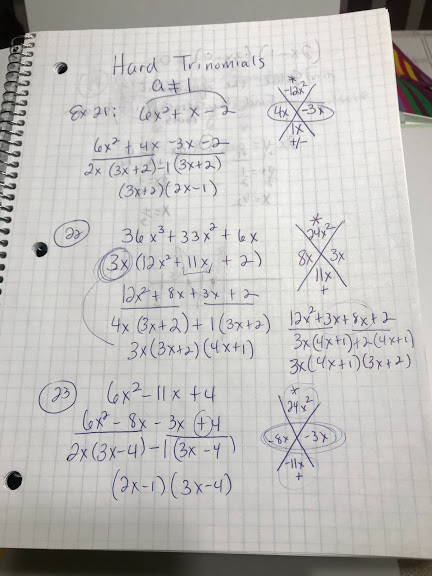
These are my notes from my Algebra 2 classes this year:
Next I teach them to spot easy trinomials and hard trinomials. I later explain that they are problems that either have an “a” equal to one or an “a” greater or less than one. I discuss how the signs work in trinomials:
+ + = ( + )( + )
– + = ( – )( – )
– – = ( – )( + ) the larger number gets the –
+ – = ( – )( + ) the larger number gets the +
When I teach the a = 1 problems, I tell the students to go to the last number and ask, “What multiplies to get the last number that will add or subtract to get the middle term.” Students can do this pretty well…especially if they know their multiplication facts.
When I teach the hard trinomials (a>1 or <1), I have the students draw a big X to the side of the problem. The students are directed to multiply the first term and the last term in the trinomial. They write that at the top of the X. The middle term goes at the bottom of the X. Next, they ask that same question about what multiplies to get the top number that adds or subtracts to get the bottom number. The students write it on the left and right side of the X. Now it’s time to turn the problem into a grouping problem. The students are told to write the first term of the original problem, then the two monomials they just found and the last term of the original problem goes on the end. Factor by grouping and they are done.
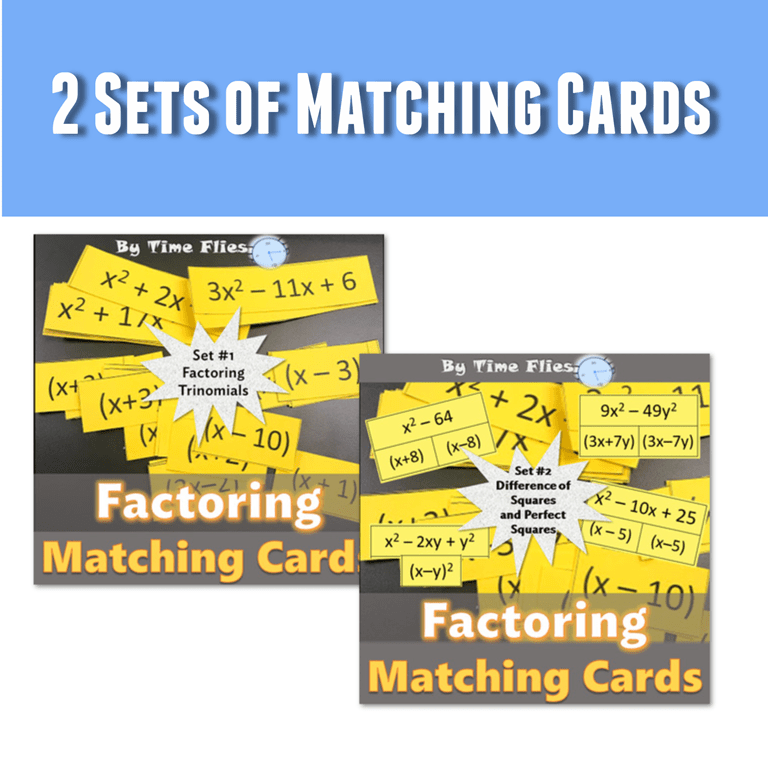
I know students should know this by the time they are in Algebra 2, but many of them don’t. I usually try to break these notes up into two days. I assign Games 1 – 6 of my Factoring Using Seek and Find. I love this activity because the students know if their answers are correct or not by finding the answers in the puzzle.
A quick tip on helping students that aren’t good with their multiplication facts. If they want to know for instance what multiplies to give you 300 that would subtract to get 44…Have students type 300/x into a graph of a graphing calculator, then go to the table. The table contains all the factors. I tell them to ignore all decimals. They will see a 50 and a 6 in the x and y columns. They can reason that if they subtract, they can get 44.
Factoring is a very important concept and students need this skill to survive in their upper level math courses. I finally feel confident that my students understand it since I now stick with a certain way of presenting it to them. I truly believe in the way I teach factoring and I hope that I have given you some ideas on how best to help your students successfully learn this concept!
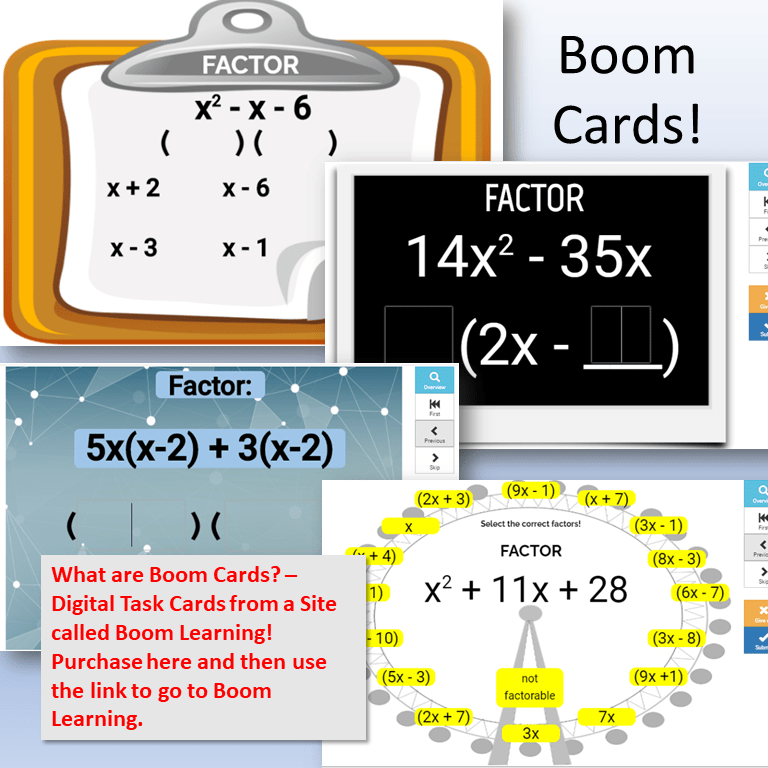
I also made 4 sets of Boom Cards. Boom Cards are awesome because you can have your students work through them as many times as they want until they understand. They are great for digital learning!
I finally have all of my factoring activities together in one bundle. You can never have too many factoring options. Factoring is a biggie and we all know how students tend to be weak in this area. The calculus teacher at my school is always telling me how students forget how to factor. This skill needs to constantly be recycled until it finally sticks!
I could do exponential functions all year. I really enjoy them and think they are super fun. When I got my master’s degree, I did a study on exponential functions. I learned so much and I found that I was really interested in them. I created this first lesson more than 10 years ago and have been using it ever since! Creating that first activity sparked me into creating more and experimenting with some other ideas. I’m excited to share with you my list of 9 Must Do Exponential Function Activities!
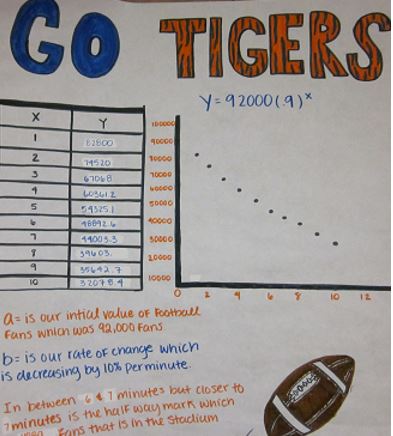
(1) Exponential Function Poster Activity:
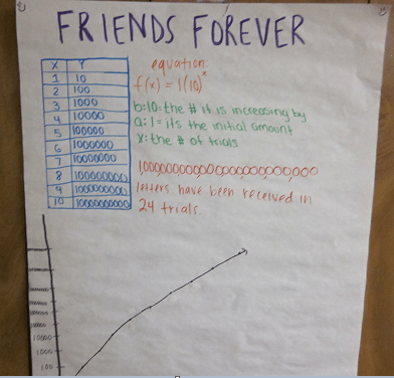
This is my very first exponential function activity that I ever created. It’s not the first lesson I teach when I’m starting this content, but it’s my favorite. This activity is the ultimate collaborative and differentiable activity. There are so many interesting exponential function situations! It’s been tried, tested and tweaked. Basically this lesson is a collaborative activity where the students are given an exponential scenario. The groups must create a multi-rep poster where they collect data, draw a graph, write an equation and answer a question.
The lesson opener is a bacteria problem. I want every student to get a feel of how they should work through one of these scenarios. The bacteria problem talks about what bacteria are and how they can multiply very quickly. I help the students go through the multi-representations to make sure they know what is expected of them when they start their poster.
Next, I show them their choices which are:
A Chain Letter Problem
A Zombie Situation
A Tournament Bracket
A College Football Situation
Making Friendship Bread
A Lovely Cockroach Scenario
Every situation usually gets chosen. You can entice students to create their own situation too. The college football situation was a student idea from years ago that I have improved upon to make it work better. Your students are amazing and creative, so don’t think that they wouldn’t be able to make up a situation of their own. The student of mine that created the football problem was not one of my top students, but because he was the one that thought of the scenario, he was interested and did a great job of completing the task.
After the bacteria problem, I turn the students loose and let them start their work. They are told to be creative and display the information in a way that is interesting and pleasing. I tell them to title the poster and make sure every person in the group writes on the poster. I supply the poster paper, the markers and the scenario sheets.
I’ve learned to watch out for misconceptions. Some students when creating graphs, will take the exact y-values and place those numbers on the y-axis. Here is an example below that I didn’t catch until it was too late. I cringe when I see this! (Not a very creative poster either…ugh!)
Once the posters have been created, it’s time for the Gallery Walk! I want the students to check out at least 4 posters. I’ve created a page that students fill in while looking at the posters. They have to write the title of the poster, determine the domain and range, decide if the situation is growth or decay and then write down one thing they may wonder about the situation. The conversations that I hear are amazing. They love getting to look at the other posters and they love to critique them as well.
I’ve had feedback from teachers that have taken my activity and changed it to fit their needs. One teacher used a speed dating strategy where the students worked through a problem on their own and became the expert. The possibilities are endless. Each teacher has their own unique way of teaching and their own unique classroom situation. If you have a group of rowdy kids that you don’t want up running around, then let them do their own problem on notebook paper or graph paper. You could even let them create the table and graph in excel and present the problem in a PowerPoint.
(2) Exponential Function Activity in Google Slides Form
Out of necessity last year, I created a Google Sides version of the lesson above. I’m having a hard time deciding which one to use this year. Instead of making posters, the students create the table, graph and equation in Google Slides. This doesn’t sound very exciting except that my whole class was in the same Google Slides all working at the same time. I was 2000 miles away monitoring the activity. They asked me questions and I could see them working in real time. I loved it so much that I’m honestly going to have a hard time deciding what I should use. Maybe I’ll let one class do the posters and one class do the digital form and compare the two. If you are big into digital resources you will love this. I now have this version in my TpT store: Google Slides Exponential Functions Activity. Below is one of the slides that I graded. Looking at this now, I should have asked the students if this situation was discrete or continuous.
(3) Tower of Hanoi
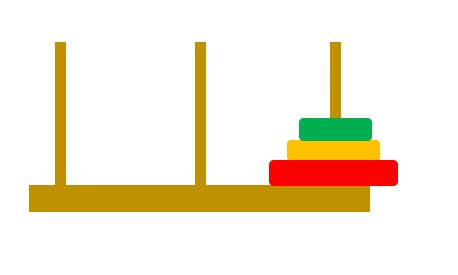
Find a Tower of Hanoi game on the internet or have the students download an app on their phone. The object of the game is to move the discs from one stack to another stack in the least amount of moves. You can never put a larger disc on top of a smaller one. The number of discs and the least number of moves is an exponential function. It’s fun to let the students play a while and get them to create a table of the number of discs and the least number of moves and then see if they can figure out the exponential function.
(4) Twizzler Decay Activity
Tasty and fun. This is a freebie I’d like to share with you! I love using this as a quick lesson opener. Students measure a Twizzler and jot down the data in a chart. The student folds the Twizzler in 1/2, cuts it and measures it. Each time the student continues this step until there is not enough Twizzler left to work with. They plot the table and then lots of discussions can take place about decay or even the concept of half-life. Click Here for the Freebie: Exponential Function Twizzler Freebie
(5) Exponential Function Unit
This is the first thing I start with when I introduce Exponential Functions in Algebra 2. I refuse to stand up and lecture over this topic so I let the students work through this unit at their own pace. I copy the pages as a booklet. Students can use a calculator and even partner up if they want to work with someone. I let them work through the unit and figure out most of the information by graphing and using the information that they have already learned earlier in the year about transformations and domain and range. I do have to talk about asymptotes because we have not discussed this concept much up to this point. I teach on a block schedule and it takes most students a good 2 class periods to get this packet done. Topics covered are transformations, e, compound interest, 1/2 life, growth, decay, domain, range, y-intercepts, asymptotes, an inverse problem, writing equations from tables, growth and decay model scenarios, a paper folding activity, assessments and bell ringers and lesson closers. There’s a ton of information. I usually get the students to trade and grade after all is said and done. I feel like they learn a lot by working through this on their own. Students need to see that they can work on their own and figure things out. If you are interested, click the link: Exponential Functions Unit.
(6) Exponential Function Task Cards
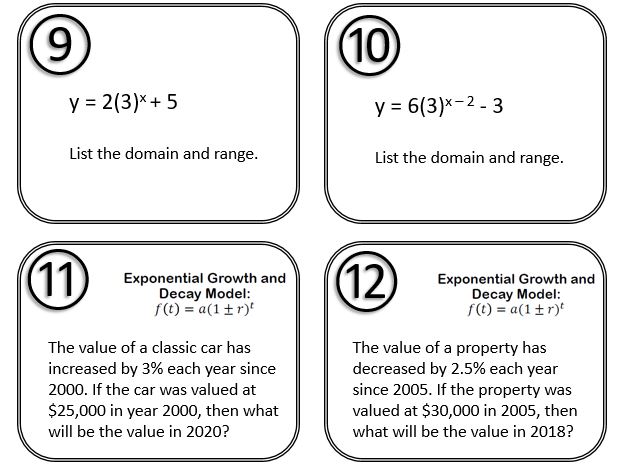
I have a set of 20 Exponential Functions Task Cards. For some reasons, students do very well with task cards. If you put these same 20 questions on a worksheet, some students will be bored or are overwhelmed with thinking about doing a 20 question worksheet and they will give up. Take the same 20 questions and put one on a card, now they will sit there and work through them. It’s amazing! This set of task cards would be a great review right before an assessment. The task cards cover recognizing growth and decay from an equation, transformations, key features of graphs, the growth and decay model and compound interest.
(7) Sierpenski’s Triangle
How do you get all of these activities done? Part of my strategy is to do them in stations. Really math labs or centers would be more accurate. It would be hard to time these stations and expect students to be completely finished with each task. The Sierpenski Triangle activity, the Tower of Hanoi and several more exponential phenomena are discovered and tinkered with during my Exponential Stations Resource.
I love the Sierpinski Triangle activity because not only do the students create beautiful art work, they have to collect data on the number of shaded or unshaded triangles. We then put all of the triangles together to make a giant Sierpinski Triangle!
(8) Compound Interest Study
Students are told that they have inherited some money but to receive it, they must follow some rules. Every student in the class will probably end up with a different situation. Each student gets 4 cards that tell them how much money they inherited, how long they have to invest it and 2 different compounding options to compare. They work through their problem and then share their information. This study sparks lots of good conversations and helps the students realize that compounding doesn’t make much difference but time invested does make a difference! Get the Compound Interest Study Here!
(9) Marble Slides Exponential Function Desmos Activity
If you aren’t using the Desmos Graphing Resources, you need to start. I love the Marble Slides Activities and so do the students. There are several Marble Slides Activities for various functions. The object is to change the equations so that when the marbles are dropped, they travel the correct route and hit all of the stars which means success. Students learn how to manipulate the equations so that the marbles do just what they want. Very fun and engaging!
So there you have it! If you can get most of these activities and lessons done, then your students will know tons of awesome math content. I have all of these activities bundled (except for the google slides activity) into one package for 20% off. If you are intersted, then click on the pic below. If there is something that you can’t find, please let me know. I’d love to add things that teachers are looking for. Thanks for visiting this article.
If you teach a sophomore or junior level math class, then you know in October each year the juniors take the PSAT/NMSQT and the sophomores take the PSAT 10. Although these are both preliminary scholastic aptitude tests, they are important for students. Not only could students receive scholarships if they do well on the assessments, but students can see where they stand in their college readiness skills.
What is the role of the educator in all of this? We are here to help our students be prepared! Yes, on a daily basis we are teaching content and skills that are tested, but when is the last time you looked at a PSAT or SAT? Some questions on these tests are straight forward, but others are not. It will help your students if you are aware of what types of questions will be asked and how they will be asked.
The math content on the test is broken down like this:
3 Main Areas (Chosen because they appear in many college majors and careers)
Heart of Algebra (Linear equations and systems)
Problem Solving and Data Analysis (Using data, statistics and numeracy to solve and analyze problems)
Passport to Advanced Math (Manipulating complex equations)
A 4th area that can also show up on the test is Geometry and Trigonometry. College Board does not put these with the main areas for some reason, so I’m assuming it does not appear as often or isn’t the main focus.
To prepare our students, not only do we want to review the necessary content, but we should prepare them by using calculator and non calculator practice. We can also time our students because all the tests are timed on the PSAT.
The math test is broken into a 25 minute no calculator portion with 17 questions. Four of those questions are grid questions. The 2nd math portion where the students can use a calculator is a 45 minute test with 31 questions and 4 of those are grid questions.
I have created many different practices for taking the PSAT and SAT. One of my favorites that I think would be useful to students is a practice that can be broken into a 5 week plan and used as bell ringers. The topics covered are: Systems, Quadratic Factoring and Solutions, Simplifying Radicals, Polynomials, Measures of Central Tendency, Slope, Distance, Inequalities, Parallel Lines and Transversals, Area of Circles and Triangles, Volume, Special Right Triangles, and Setting Up and Solving Equations.
The worksheets are layed out where the front side is just like the back of the worksheet. The front is practiced with the help of the teacher and students, but the back is done independently and is timed. How much better do you think your students would do if they had this kind of practice for several weeks before the test?
If you would like to see this for yourself, click the product picture below to check it out in my store.
Even if you don’t use my products, please find ways to help your students become familiar with the test. Start having conversations with your classes about how important it is to do well on theses tests. Encourage your students to seek information on prospective colleges and find out what the required SAT scores are for admission. I found a chart with score ranges for 360 colleges. It was written in 2016 but was updated last year. Good luck! May your students do awesome on the upcoming college readiness tests!